
{
“@context”: “https://schema.org”,
“@type”: “BlogPosting”,
“headline”: “Mobile Sales Force Automation FMCG: Why Teams Need It”,
“description”: “Mobile sales force automation FMCG puts store visits, orders, and shelf capture on a field rep’s phone. See what it does and how to choose.”,
“author”: {
“@type”: “Organization”,
“name”: “eBest Mobile”
},
“publisher”: {
“@type”: “Organization”,
“name”: “eBest Mobile”,
“logo”: {
“@type”: “ImageObject”,
“url”: “https://www.ebestmobile.com/wp-content/uploads/ebest-logo.png”
}
},
“datePublished”: “2026-08-19”,
“dateModified”: “2026-08-19”,
“mainEntityOfPage”: {
“@type”: “WebPage”,
“@id”: “https://www.ebestmobile.com/blog/mobile-sales-force-automation-fmcg/”
},
“keywords”: “mobile sales force automation fmcg”
}
{
“@context”: “https://schema.org”,
“@type”: “FAQPage”,
“mainEntity”: [
{
“@type”: “Question”,
“name”: “What is mobile sales force automation for FMCG?”,
“acceptedAnswer”: {
“@type”: “Answer”,
“text”: “Mobile sales force automation for FMCG is a field-first system that runs store visits, order capture, shelf checks, and route planning on a rep’s phone — designed for offline conditions and thousands of small outlets. Unlike generic SFA, it captures what happens at the shelf and connects to distribution, so execution is visible in near real time rather than weeks later.”
}
},
{
“@type”: “Question”,
“name”: “How is mobile SFA different from generic sales force automation?”,
“acceptedAnswer”: {
“@type”: “Answer”,
“text”: “Generic SFA grew up around leads, pipelines, and forecasts for a small number of B2B accounts with reliable internet. Mobile SFA for FMCG assumes the opposite: short cycles, weak connectivity, and huge outlet counts. It adds offline capability, shelf capture, route-based coverage, and distributor integration as core features rather than optional add-ons.”
}
},
{
“@type”: “Question”,
“name”: “Why does FMCG need mobile, not just web-based SFA?”,
“acceptedAnswer”: {
“@type”: “Answer”,
“text”: “Because the work happens at the shelf and on the route, often without signal. A web tool the rep can only open at the end of the day captures nothing in the moment. Mobile SFA for FMCG records the visit, the order, and the shelf photo where they happen, which is the only way to get accurate field data from traditional trade.”
}
},
{
“@type”: “Question”,
“name”: “What capabilities should I look for in mobile SFA for FMCG?”,
“acceptedAnswer”: {
“@type”: “Answer”,
“text”: “At minimum: an offline-capable visit app, on-device order and stock capture, shelf photo recognition with perfect-store checks, route planning, AI sell-in suggestion, and live distributor integration. An integrity layer that detects reused photos matters too, because field data is only useful if it’s trusted.”
}
},
{
“@type”: “Question”,
“name”: “How does mobile SFA connect to distribution?”,
“acceptedAnswer”: {
“@type”: “Answer”,
“text”: “The rep’s app should read distributor stock and push orders straight into the distributor management system, so a shelf gap triggers replenishment without a manual handoff. On a unified platform like eBest’s, SFA, DMS, TPM, and DSD share the same store and stock data, which keeps the whole route-to-market loop consistent.”
}
},
{
“@type”: “Question”,
“name”: “How do I start rolling out mobile sales force automation for FMCG?”,
“acceptedAnswer”: {
“@type”: “Answer”,
“text”: “Begin offline-first with the visit app — check-in, orders, shelf photos — then connect it to distributor stock, turn on perfect-store checks and routing, and pilot in one region against a named KPI before expanding. The key is to make the rep’s daily job easier first, then add analytics and roll outward.”
}
}
],
“datePublished”: “2026-08-19”,
“dateModified”: “2026-08-19”
}
{
“@context”: “https://schema.org”,
“@type”: “HowTo”,
“name”: “How to Roll Out Mobile Sales Force Automation FMCG”,
“description”: “A four-step path to deploying mobile SFA for FMCG that field teams will actually use.”,
“step”: [
{
“@type”: “HowToStep”,
“position”: 1,
“name”: “Start with the visit app, offline-first”,
“text”: “Put store check-in, orders, and shelf photo capture in the rep’s hand before anything else. Adoption rises when the tool does today’s job better, not when it adds reporting.”
},
{
“@type”: “HowToStep”,
“position”: 2,
“name”: “Wire it to distributor stock”,
“text”: “Connect the app to your DMS so the rep sees stock and the order flows through, with no manual rekeying. This is where distributor management stops being a separate project.”
},
{
“@type”: “HowToStep”,
“position”: 3,
“name”: “Turn on perfect-store checks and route planning”,
“text”: “Add shelf recognition and revenue-based routing once orders are flowing, so coverage gaps and compliance show up automatically instead of in a quarterly review.”
},
{
“@type”: “HowToStep”,
“position”: 4,
“name”: “Pilot, measure, expand”,
“text”: “Run the loop in one region, track a named KPI like visit compliance or perfect store score, then roll the pattern to more channels and to TPM and DSD.”
}
],
“datePublished”: “2026-08-19”,
“dateModified”: “2026-08-19”
}
Mobile Sales Force Automation FMCG: Why Teams Need It
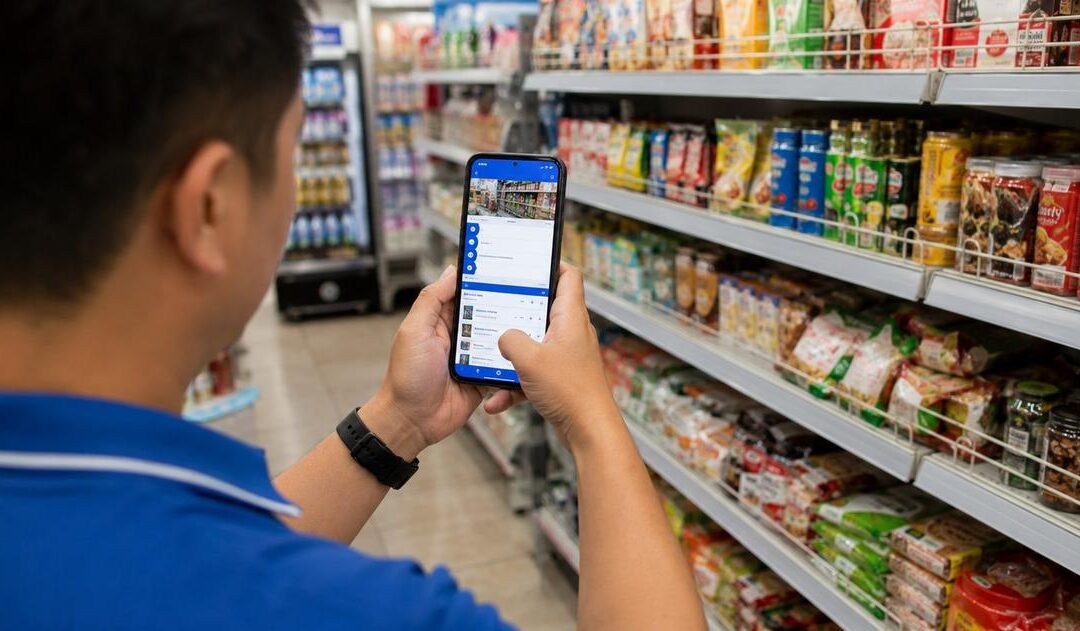
A field rep pulls into a town with 40 small grocery shops, no internet in half of them, and a distributor who still tracks stock on paper. The only way the brand grows there is if the rep can take orders, photograph shelves, and follow a planned route — all from a phone that works offline. That is mobile sales force automation fmcg in one sentence: a field-first, route-to-market system and the clearest example of mobile sales force automation fmcg: it runs on the rep’s device in the store, not a CRM dashboard that lives on a laptop back at headquarters.
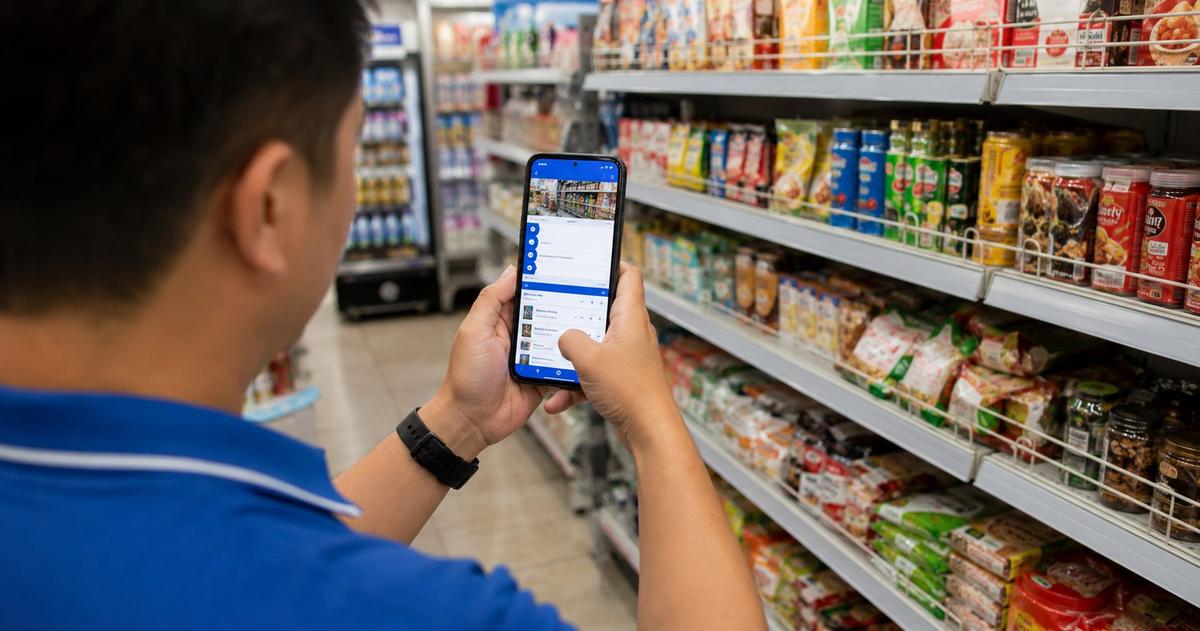
Mobile sales force automation fmcg is the practice of running the entire field sales motion — visit planning, in-store execution, order capture, and distribution visibility — through a mobile app built for the realities of consumer goods: spotty connectivity, thousands of small outlets, and constant shelf-level work. Generic SFA often stops at logging calls and activities; mobile SFA for FMCG goes further because the work doesn’t happen at a desk. It happens at the shelf, on a motorcycle between towns, and in a distributor’s back room. The difference is not cosmetics. It changes which stores get visited, what gets ordered, and how fast a stockout is seen.
What Mobile Sales Force Automation FMCG Actually Means vs Generic SFA
The term “SFA” gets stretched to cover almost any sales tool, which is why it’s worth being precise. Generic sales force automation grew up in B2B software and pharma detailing: reps manage leads, log calls, track pipelines, and forecast. Useful, but it assumes the buyer is a handful of accounts with long sales cycles and reliable internet.
FMCG is the opposite. A single brand can serve tens of thousands of outlets — kiranas, warungs, sari-sari stores, convenience shops — where the “sale” is a 90-second order, the relationship is the rack, and coverage is the whole game. Mobile sales force automation for FMCG therefore means a different architecture: an offline-capable store-visit app, not a browser tab; route planning built for coverage, not territory management; and execution capture — photos, facings, stock — as first-class data, not an afterthought.
The simplest test of whether a tool is real mobile SFA or just CRM with a phone skin: does it work the same way with no signal, and does it capture what happened at the shelf? If the answer is no to either, it isn’t built for FMCG field execution.
Core Mobile Sales Force Automation FMCG Capabilities
The capability set that defines mobile sales force automation fmcg sits in the rep’s hand.
Offline-capable store-visit app. The app loads the day’s beat, lets the rep check in, and records every activity even with no connection, syncing when signal returns. This is non-negotiable in traditional trade, where connectivity is the exception, not the rule.
Orders and stock capture. Orders are taken on the device with the right catalog, pricing, and credit rules for that outlet, and stock-on-hand is recorded so distribution gaps surface early rather than at month-end.
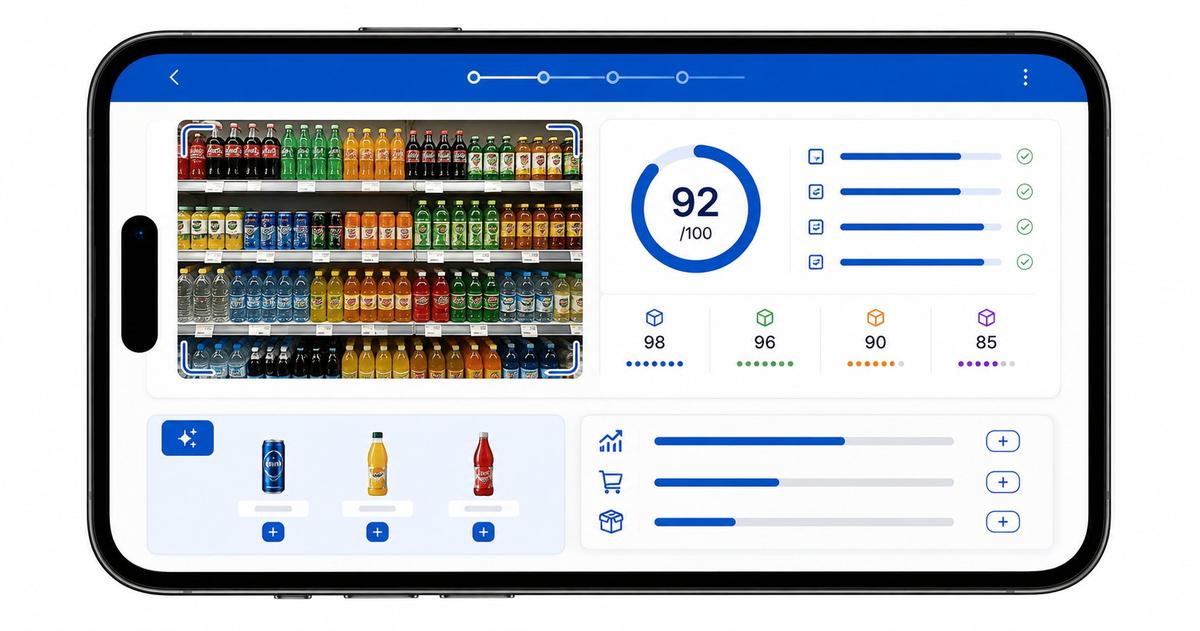
Shelf capture and perfect-store checks. A photo becomes a compliance read — facings, share of shelf, POSM, planogram match. eBest’s perfect store image recognition scores this on the phone, and a retail execution software guide explains how the loop closes from photo to action at retail execution software for CPG.
Route planning. Visits are sequenced for coverage and revenue potential, not just geography. This is where field productivity is won or lost, and AI route optimization for CPG field sales shows the lift when sequencing is driven by data instead of habit.
AI sell-in suggestion. Instead of a one-size deck, the app builds a store-specific pitch from the outlet profile and local best-sellers — eBest’s AI Selling Story. A deeper look is in our AI sell-in suggestion write-up. It is the difference between an order-taker and a seller, and it is concrete enough to test in a demo.
DMS and distributor integration. Mobile SFA earns its keep when it’s wired to distribution: the rep sees distributor stock, and the order flows straight into the distributor management system rather than a separate spreadsheet. On eBest’s one mobile-first platform, SFA, DMS, TPM, and DSD share the same store, shelf, and stock data, so a shelf gap becomes a replenishment order without a manual handoff. Leading consumer goods brands run field sales and distribution on eBest across markets; Wall’s and Mondelēz, for example, operate unified SFA plus AI in production, and the pattern repeats across other global names in beverage and snacks.
The Pain Mobile Sales Force Automation FMCG Solves
The reason mobile sales force automation fmcg gets funded is that the pain is structural, not cosmetic. Three problems show up in almost every traditional-trade business.
First, fragmented traditional trade — the core problem mobile sales force automation fmcg was built to solve. In most emerging markets the majority of FMCG volume moves through tiny independent outlets, not modern chains. No central replenishment, no EDI, no clean data — just a rep who has to be there. A field-first app is the only practical way to make that chaos visible.
Second, thousands of small outlets and thin coverage. With a manual beat, reps visit who they remember, not who matters. Route and visit data expose the gaps: stores never visited, stores visited but never ordered, high-potential outlets slipping through. McKinsey’s consumer goods research keeps returning to execution visibility as the layer most CPG companies still lack, and their CPG insights are a useful baseline for why that gap persists.
Third, thin visibility to what actually happens. Headquarters learns about a missed shelf or a dead stockout weeks late, if ever. NielsenIQ’s retail execution work shows that execution consistency — not promotion size — protects share in volatile categories, which is exactly why their retail execution research matters to field teams. Mobile SFA compresses that lag from weeks to the moment the photo is taken. The same logic shows up in how cloud platforms frame consumer goods execution, and BCG’s consumer products practice repeatedly points at route-to-market as the lever most brands underbuild.
How to Choose Mobile Sales Force Automation FMCG
Buying mobile sales force automation fmcg is less about feature lists and more about fit to field reality. A few questions separate tools that will be used from tools that will be abandoned.
- Does it work fully offline, or only “with a connection”? Test it in a store with no bars.
- Is shelf capture a real capability with recognition, or just a photo upload? Perfect-store checks only pay back if the photo turns into structured data.
- Does it connect to your DMS and distributor stock, or stand alone? Standalone SFA still leaves the manual handoff that causes stockouts.
- Is it one platform or a stack of integrations? eBest runs SFA, DMS, TPM, and DSD together, which is what keeps the data loop honest.
- Is there an integrity layer? eBest’s replay / fake-photo detection flags reused or screen-captured images, so the field data the business decides on stays believable.
The trap is buying “SFA” that is really CRM. If the vendor’s demo is a pipeline and a dashboard, keep looking. For field sales that serve thousands of outlets, the better framing is field sales automation for CPG built around the visit, not the lead.
How to Roll Out Mobile Sales Force Automation FMCG
A phased rollout avoids the big-bang failure that kills most mobile sales force automation fmcg programs. A four-step path works across most FMCG organizations:
- Start with the visit app, offline-first. Put store check-in, orders, and shelf photo capture in the rep’s hand before anything else. Adoption rises when the tool does today’s job better, not when it adds reporting.
- Wire it to distributor stock. Connect the app to your DMS so the rep sees stock and the order flows through, with no manual rekeying. This is where distributor management stops being a separate project.
- Turn on perfect-store checks and route planning. Add shelf recognition and revenue-based routing once orders are flowing, so coverage gaps and compliance show up automatically instead of in a quarterly review.
- Pilot, measure, expand. Run the loop in one region, track a named KPI like visit compliance or perfect store score, then roll the pattern to more channels and to TPM and DSD.
Mobile Sales Force Automation FMCG FAQ
Q1: What is mobile sales force automation fmcg?
Mobile sales force automation for FMCG is a field-first system that runs store visits, order capture, shelf checks, and route planning on a rep’s phone — designed for offline conditions and thousands of small outlets. Unlike generic SFA, it captures what happens at the shelf and connects to distribution, so execution is visible in near real time rather than weeks later.
Q2: How is mobile SFA different from generic sales force automation?
Generic SFA grew up around leads, pipelines, and forecasts for a small number of B2B accounts with reliable internet. Mobile SFA for FMCG assumes the opposite: short cycles, weak connectivity, and huge outlet counts. It adds offline capability, shelf capture, route-based coverage, and distributor integration as core features rather than optional add-ons.
Q3: Why does FMCG need mobile, not just web-based SFA?
Because the work happens at the shelf and on the route, often without signal. A web tool the rep can only open at the end of the day captures nothing in the moment. Mobile SFA for FMCG records the visit, the order, and the shelf photo where they happen, which is the only way to get accurate field data from traditional trade.
Q4: What capabilities should I look for in mobile SFA for FMCG?
At minimum: an offline-capable visit app, on-device order and stock capture, shelf photo recognition with perfect-store checks, route planning, AI sell-in suggestion, and live distributor integration. An integrity layer that detects reused photos matters too, because field data is only useful if it’s trusted.
Q5: How does mobile SFA connect to distribution?
The rep’s app should read distributor stock and push orders straight into the distributor management system, so a shelf gap triggers replenishment without a manual handoff. On a unified platform like eBest’s, SFA, DMS, TPM, and DSD share the same store and stock data, which keeps the whole route-to-market loop consistent.
Q6: How do I start rolling out mobile sales force automation for FMCG?
Begin offline-first with the visit app — check-in, orders, shelf photos — then connect it to distributor stock, turn on perfect-store checks and routing, and pilot in one region against a named KPI before expanding. The key is to make the rep’s daily job easier first, then add analytics and roll outward.
Mobile sales force automation fmcg stops being a slogan the day it lives inside the rep’s app: the visit is logged offline, the order flows to the distributor without rekeying, the shelf is scored from a photo, and the route is planned for revenue instead of habit. The brands already running it aren’t buying software — they’re buying back the two weeks of lag between what happens at the shelf and what headquarters knows. For field teams serving thousands of small outlets, that lag is the difference between growing share and watching it walk out the door.
Want to see mobile sales force automation fmcg on a real rep’s device? Request a demo or explore how eBest’s SFA software and distributor management system put these capabilities to work in production.
Ready to Transform Your Sales Force?
Discover how AI-powered SFA software can help your CPG company boost field productivity, improve retail execution, and drive revenue growth.