

Data-Driven Retail Execution Software: Cut Audit Time 60%
A rep walks a store aisle at 9 a.m., phone in hand. The display that was supposed to launch that morning isn’t built, and the promoted SKU is two facings short on the shelf. With data-driven retail execution software, that finding lands on the regional manager’s dashboard before lunch — the photo, the compliance score, and a routed task to fix it. Without it, the same problem takes two weeks to surface in a spreadsheet, long after the promotion window closed.
Data-driven retail execution is a mobile-first approach to perfect store: every visit starts from real-time sales, inventory, and compliance data for that specific outlet, and every photo and order captured during the visit flows back to headquarters the moment it happens. Mobile, data-driven retail execution software cuts store audit time by up to 60% while pushing accuracy to 95% or higher — which is why CPG brands managing tens of thousands of outlets now treat it as core infrastructure, not a nice-to-have.
What Is Data-Driven Retail Execution (and What It Is Not)
Data-driven retail execution is the practice of running store visits, shelf audits, and merchandising decisions on live data instead of static checklists and gut feel. Each visit starts from the store’s actual performance picture — last week’s sell-through, current stock position, promotional calendar, shelf compliance score — so the rep knows what to fix, pitch, and photograph before entering the aisle. The same data returns to headquarters the second the visit ends, turning execution from a monthly reporting exercise into a live operational loop.
| Traditional retail execution | Data-driven retail execution |
|---|---|
| Static visit checklists and paper audits | Store-specific tasks generated from live data |
| Findings reported days after the visit | Shelf photos and scores synced in real time |
| Managers react after the month ends | HQ sees gaps the same day and reroutes field effort |
| Success measured by audits completed | Success measured by shelf performance improvement |
That loop is the difference between digitizing the old process and actually transforming it. NielsenIQ retail execution research shows consistent shelf compliance — not bigger promotions — is the variable that protects market share in volatile categories, which is why leading CPG teams are moving execution decisions from instinct to evidence.
Why Retail Execution Quality Decides CPG Revenue
Every CPG brand spends heavily on trade promotions, shelf placement, and in-store displays. Yet a large share of that spending fails to produce a positive return — and the primary culprit is weak in-store execution. Products go missing from shelves. Displays never get set up. Price labels sit wrong for weeks before anyone notices. For a brand distributing across 50,000 or more outlets, these failures compound into millions in lost revenue every quarter.
McKinsey’s CPG industry research confirms that digital-first brands are widening the execution gap over traditional competitors. The math is brutal: the global CPG industry spends roughly $500 billion a year on trade promotions, and execution failures silently eat a meaningful slice of that. Worse, the damage is compounded — NielsenIQ’s out-of-stock benchmarks suggest a significant share of shoppers switch brands permanently after a single empty shelf.
There’s also the field team cost nobody budgets for. Field representatives spend around 40% of their time on administrative busywork — duplicate data entry, re-typing paper forms, chasing approvals — instead of selling and merchandising. Data-driven retail execution software removes that overhead by capturing data once, at the shelf, and routing it automatically to the people who act on it.
The Three Capabilities That Actually Matter
Industry analysts at Gartner’s retail execution monitoring reviews consistently rank AI-powered image recognition and real-time compliance tracking as the features that move results for CPG buyers. Here’s what each one does in practice.
Shelf Image Recognition That Replaces the Checklist
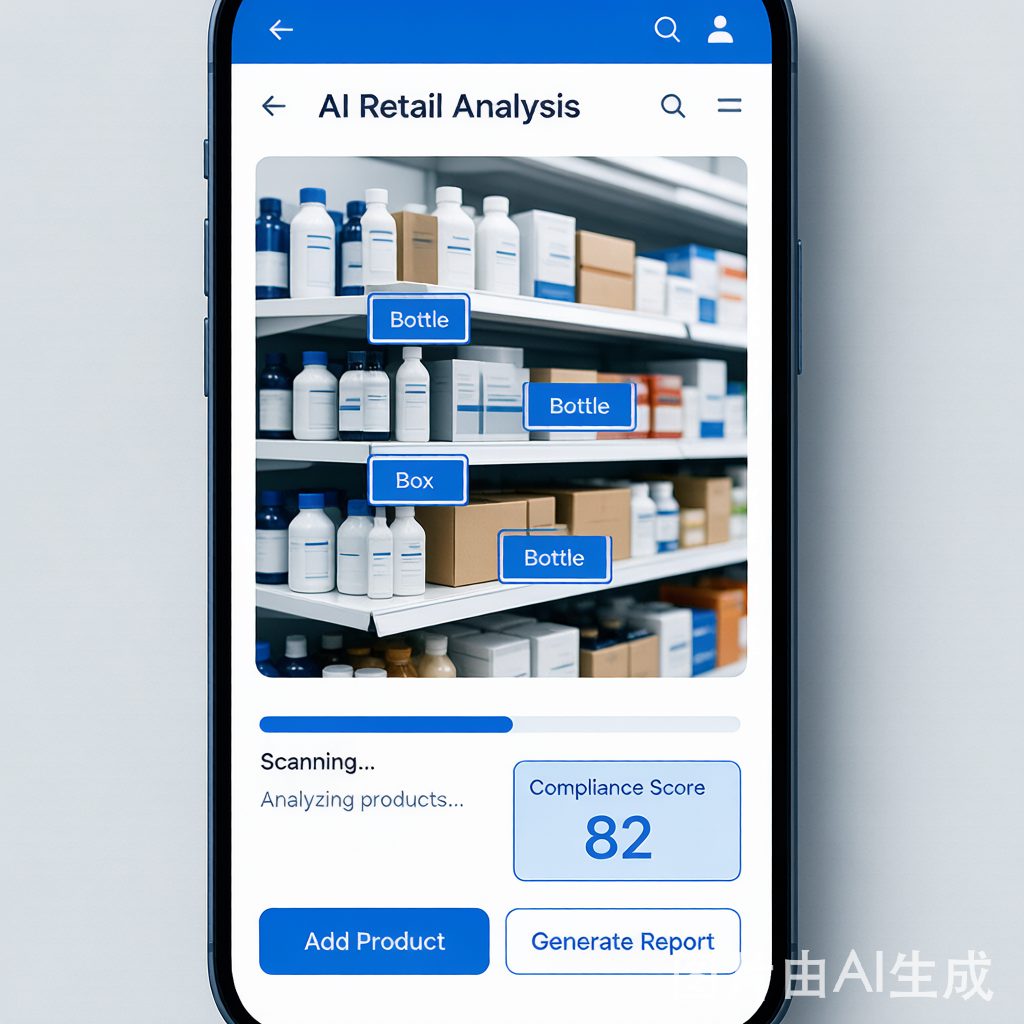
The most transformative capability is AI-powered shelf image recognition. The rep photographs the shelf; the software detects planogram compliance, missing SKUs, pricing errors, and competitor encroachment in seconds. Manual audits carry each auditor’s interpretation and take hours per store; image recognition is objective and takes minutes. For a brand like Coca-Cola, which maintains perfect store standards across millions of outlets in more than 200 markets, that consistency is the whole point — the AI keeps learning from every photo, catching patterns a tired human auditor would miss.
Real-Time Compliance Tracking That Kills the Two-Week Lag
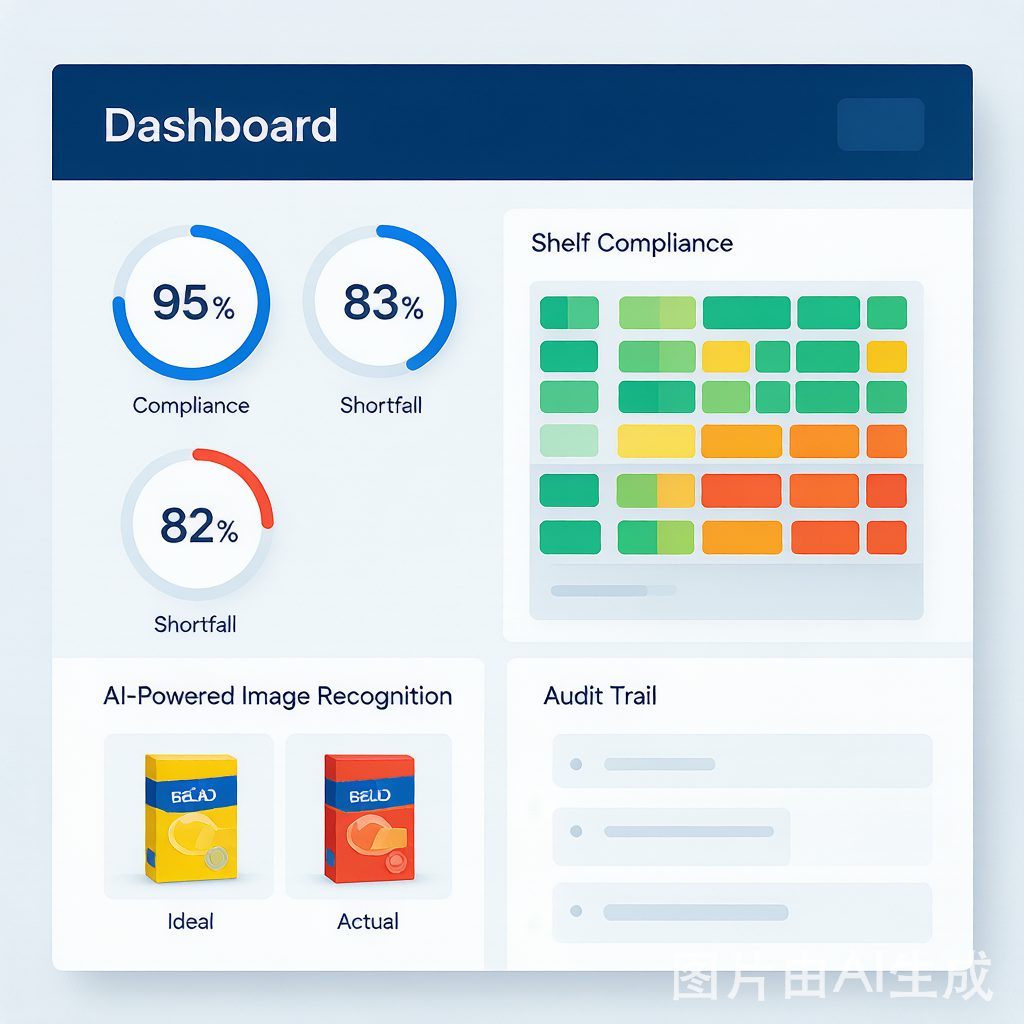
The old workflow: the rep fills a paper form, submits it at end of day, and the data trickles through regional offices before reaching HQ days later. By then the shelf has moved on. Data-driven retail execution replaces that lag with a real-time stream — when a rep completes an audit on a mobile device, compliance scores, shelf photos, and issue flags appear on the HQ dashboard instantly. Sales directors stop reviewing history and start directing the current week: which stores are slipping, which task to assign, who fixes it today.
HQ-to-Field Visibility Dashboards
Retail execution produces enormous data, and data without visibility is just noise. The right software gives each role its own view — a rep sees their route and store-specific targets; a regional manager sees territory trends with drill-down to problem stores; an executive sees aggregated perfect store scores and the correlation between execution quality and sales. Everyone looks at the same numbers through the right lens, so debates about what happened get replaced by decisions about what to do next.
How eBest Closes the Loop Between Shelf and Back Office
Most platforms stop at digitizing the audit form. eBest connects retail execution to the rest of route-to-market — SFA software for CPG field teams, a distributor management system, and trade promotion management software — on one AI-powered platform. That integration is where the value lives, because retail execution never happens in isolation. It’s tied to field sales activity, distributor inventory, and promotion planning.
Consider Coca-Cola’s problem: millions of outlets, thousands of reps, shelf standards that must hold everywhere. When a shelf photo shows missing facings, the eBest platform can check distributor stock, suggest a replenishment order, and route the fix to the right rep — in the same workflow. The execution data feeds field planning, distribution, and promotion analytics instead of sitting in a silo. Customer success stories from brands running SFA and distribution on eBest show this loop working in production, across markets.
Data-Driven Retail Execution Rollout: 5 Steps That Work
Going live with data-driven retail execution doesn’t require a rip-and-replace. A phased rollout on top of your existing field process works best.
- Clean the outlet master first. Data-driven execution is only as good as the store list. Merge duplicate outlets, fix missing attributes, and assign tier-based visit frequency before turning on anything smart.
- Run a pilot in one region or chain. Pick a territory with a mix of store formats. Validate that photos, scores, and tasks flow cleanly for four to six weeks before scaling.
- Switch audits to photo-based, AI-scored visits. Move from checklist to shelf-photo capture with AI recognition. This is the step that cuts audit time and removes auditor subjectivity.
- Wire the loop to distribution and promotion. Connect compliance findings to distributor stock and promotion calendars so a flagged display gap triggers a replenishment or a field task automatically.
- Manage by exception, not by report. Give managers a dashboard of stores below threshold and tasks overdue. Coach on the exceptions; don’t make everyone read the same weekly report.
FAQ
Q1: What is retail execution software and how does it benefit CPG companies?
Retail execution software is a digital platform designed to help CPG brands monitor, measure, and improve how their products are presented and sold across retail outlets. Unlike generic field sales tools, it addresses shelf compliance, planogram adherence, pricing accuracy, promotional display verification, and competitor monitoring. The primary benefit is faster, more accurate in-store data capture — AI-powered platforms cut audit time by up to 60% while achieving higher accuracy than manual methods. For CPG companies with large distribution networks, retail execution software typically delivers ROI within six to twelve months through reduced trade promotion waste, higher perfect store scores, and improved field team productivity.
Q2: How long does it take to implement retail execution software for CPG?
Implementation typically takes four to twelve weeks, depending on organizational complexity, outlet count, and integration with existing SFA or DMS systems. The most successful deployments follow a phased approach: pilot in one region or category, validate the workflow and data quality over four to six weeks, then expand. Companies that invest in field training and change management — rather than rushing the technical rollout — consistently report faster time-to-value and higher adoption. Integration with existing route-to-market systems is the single biggest factor affecting speed, which is why platforms that connect natively to your SFA and DMS infrastructure are strongly recommended.
Q3: How does AI-powered shelf image recognition improve retail execution accuracy?
AI-powered shelf image recognition uses computer vision models trained on thousands of retail shelf photographs to analyze store conditions automatically. When a rep takes a photo, the AI detects product presence, verifies planogram positioning, checks pricing labels, identifies out-of-stock gaps, and flags competitor encroachment — all in seconds. This removes the variability of human auditors and provides consistent, reliable compliance data. The AI improves with every image processed, building a growing knowledge base of what perfect store looks like for each chain, category, and geography.
Q4: Is retail execution software suitable for CPG companies in emerging markets?
Yes — it’s especially valuable there, where retail fragmentation is highest and traditional trade dominates. In Southeast Asia, the Middle East, Africa, and Latin America, CPG brands typically distribute through tens or hundreds of thousands of small independent outlets. Retail execution software designed for emerging markets provides offline-first mobile capability, so reps capture data without connectivity and sync when coverage returns. Leading CPG companies including Unilever, Nestlé, and Coca-Cola already use retail execution software across their emerging market operations.
Q5: How do I choose the right retail execution software for my CPG business?
Evaluate five dimensions. First, integration: does it connect natively with your SFA, DMS, and TPM systems, or create data silos? Second, AI: is shelf recognition genuine computer vision, or just photo attachment? Third, offline capability in real field conditions, not the demo room. Fourth, role-based dashboards so reps, managers, and executives each get actionable views. Fifth, references from CPG companies of similar size and complexity — ask about implementation time, adoption, and perfect store score improvement. A platform that clears all five, with enterprise CPG deployment experience, is a strong candidate.
Q6: What is data-driven retail execution?
Data-driven retail execution is the practice of running store visits on real-time sales, inventory, and compliance data instead of static checklists. Field teams receive store-specific tasks and order suggestions, while headquarters gets a live view of shelf performance across every outlet. Mobile apps capture the evidence — photos, orders, audit scores — at the point of execution, so decisions come from what actually happened in the store, not from reports filed days later.
Q7: How does mobile retail execution software work?
Mobile retail execution software puts the entire visit workflow on a field rep’s phone or tablet: planned route, store-specific tasks, order capture, shelf photos with AI recognition, and instant compliance scoring. Because it works offline and syncs when connectivity returns, reps can audit and fix displays in stores with no signal. Results update dashboards for HQ, distributor, and promotion teams in near real time.
Data-driven retail execution turns the store visit into a revenue operation: the right task in the rep’s hand, the right photo in the record, the right fix on the shelf — and the whole loop visible to headquarters the same day. The brands already running it aren’t just catching problems faster; they’re negotiating better placements and protecting share in categories where execution consistency is the difference. If your field team still works from paper checklists and two-week-old reports, that’s the gap this category closes.
Want to see it on a real rep’s phone? Request a demo or explore how eBest’s SFA software embeds data-driven retail execution into your full route-to-market operations.
Ready to Digitize Your Route to Market?
Learn how eBest’s integrated SFA, DMS, and TPM platform helps leading CPG brands turn distribution data into competitive advantage.