

William Grant & Sons Adopts AI-Powered SFA with eBest

William Grant & Sons, the Scottish spirits company behind Glenfiddich, The Balvenie, Grant’s, Monkey Shoulder and Hendrick’s, has completed a full switchover to eBest’s AI-powered SFA across its field sales organization. Visit planning, in-store execution checks and route management now run end-to-end on the new platform, covering both On-Trade channels (bars, restaurants and nightclubs) and Off-Trade channels (supermarkets and liquor stores).
What makes the move worth watching is not the technology on its own. It is the way the system is being used: less like a digital filing cabinet, more like a working partner for every rep — something that recognizes what it sees, suggests where to go next, and hands back the one resource a sales team can never get enough of. Time in front of the customer.
A global portfolio with a demanding last mile
William Grant & Sons needs little introduction. Founded in 1887 with its portfolio sold in more than 100 markets worldwide, the company has shaped the spirits category for generations: Glenfiddich is a top-selling single malt and one of the pioneers that took the category beyond Scotland; The Balvenie holds a dedicated place in the premium hand-crafted segment; Grant’s and Monkey Shoulder anchor the blended and modern mixing scenes; and Hendrick’s stands among the most recognizable names of the gin renaissance.
Selling these brands means working in one of the most complex retail environments in FMCG. A single territory can hold a cocktail bar with a handwritten menu, a nightclub with a back bar lit in near-darkness, a convenience store with a four-facet shelf, and a wine shop stacking gift boxes next to standard bottles. Every one of them is an opportunity. Every one of them is also hard to see, hard to standardize, and hard to report on.
That last mile is exactly where the company chose to innovate.
What was slowing the team down
Ask people on the old routine what a week looked like, and the answers start to rhyme. Routes were planned by hand, which meant they took hours to build and went stale the moment a priority shifted. The paperwork that followed each visit ate into the day, so hours that should have gone to shop owners and bar managers went to forms instead.
Just as limiting was how much of the job depended on who was doing it. Every rep ran their own playbook, and the things that worked in one territory never quite spread to the next. Visits felt rushed, leaving too little room for actual selling, coaching or follow-up. Meanwhile the numbers sat in disconnected systems; by the time someone had pieced a market picture together, the month was over, and the insight arrived too late to guide coverage, brand activations or anything that happens inside a store.
None of these problems is exotic. They are the standard tax that manual field operations levy on every consumer goods company. William Grant & Sons simply decided to stop paying it.
One idea behind the program
The thinking behind the upgrade fits in a sentence: put people, data and modern technology into the same loop, so that selling becomes simpler, smarter and more effective. The system handles the seeing, counting and planning. People do what only people can — judge, negotiate and sell.
Tellingly, the goals were never written as features. More outlets covered by the same team. Better decisions, made sooner. A larger share of the working day spent with customers instead of a screen. Every capability described below exists to serve one of those outcomes, and reps can feel the difference in the shape of a normal week.
AI on the road
For most reps, the difference starts before the first store opens.
Visit plans now build themselves around what actually matters: outlet tier, business opportunity and visit requirements. Daily sequences take real distances and live traffic into account. And the plan is never set in stone — when priorities shift or a customer’s needs change, the schedule moves with them.
The effect is a quiet redistribution of the team’s scarcest resource. Hours that used to disappear into planning, guessing and windshield time now accumulate in front of customers. The same field force covers more high-value outlets, shows up at the right stores at the right moments, and treats a sudden change of plan not as a disruption but as the system doing its job.
AI in the store
The other shift happens once the rep steps inside.
In a bar or restaurant, the rep photographs the drink menu, the cocktail list or the back bar, and AI reads the brands and products in the image on the spot. In retail, shelf displays and facing counts are captured the same way. Results appear immediately and are checked with the customer standing right there; a correction takes seconds.
The deeper change is rhythm. A market picture that used to come together monthly now assembles itself daily, and every recognized bottle feeds live dashboards — head office sees the market as it is, not as it was four weeks ago. Execution gets teeth as well: display quality and share of shelf no longer rest on self-assessment, because the photo is the proof, and brand standards become traceable store by store.
Then there is the part reps appreciate most. Every minute not spent transcribing shelves into a form is a minute spent on the one thing AI cannot do: standing in front of the shop owner, making the case for the next bottle. The division of labor is deliberate. The system recognizes and records; people build relationships and close.
The setup also sharpens itself. Every on-site correction feeds back into the recognition models, so accuracy climbs with use — go-live was a starting line, not a finish line.
AI at the desk
Managers see the change from the other side of the glass.
Outlet tiers are assessed automatically, so coverage follows opportunity rather than habit. Execution gaps no longer wait for a monthly review to be discovered; they surface as follow-up priorities while there is still time to act. Live dashboards give sales leadership one shared, current view of the market, and the old habit of assembling the truth by hand quietly retires.
More is on the way. The next phase adds AI-generated “next best action” suggestions, pairing each store with specific, opportunity-rated recommendations — the bridge between data sitting in a dashboard and a conversation happening at the shelf.
Why this case matters beyond spirits
There is plenty here for other consumer goods companies to chew on.
The channel choice alone makes a statement. Spirits retail is about as hard as image recognition gets: handwritten menus, dim back bars, displays that follow no planogram. Going live there, at full scale, says more about platform maturity than any benchmark could.
The switchover style says something too. Companies often nurse old and new processes side by side for years, paying twice for data entry and never quite reconciling the numbers. This team cut over completely, prepared by training that moved region by region, with support on hand afterward. The cost of change was paid once, on purpose.
And there is a quieter point underneath it all: the program treats AI as support staff, not a stand-in for people. In a category where the sale still happens face to face, that is the right split. The machine hands time back. Humans spend it where it counts.
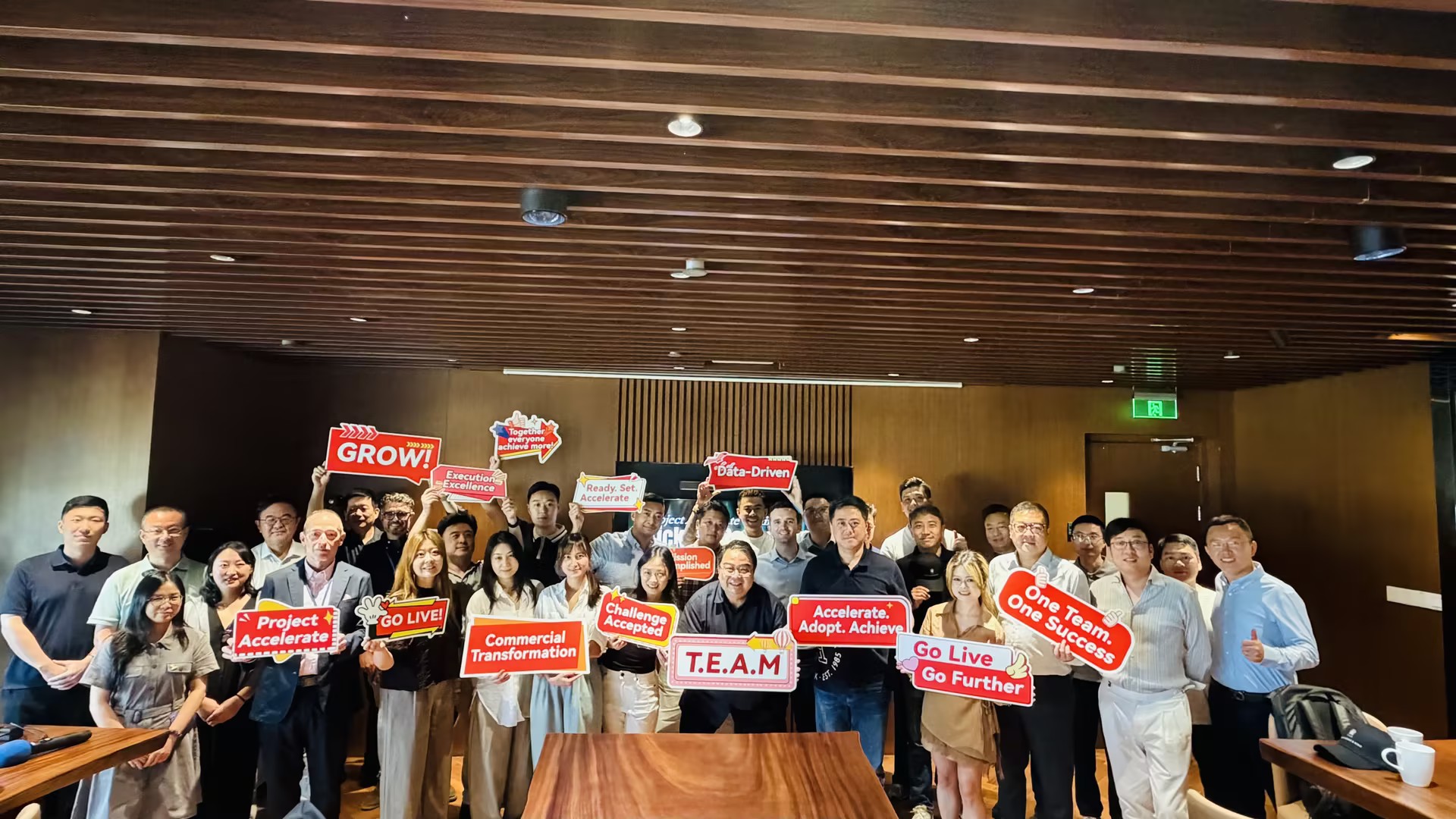
A partner for the journey
William Grant & Sons’ field team now runs on one of the most complete AI capability sets in field sales — image recognition, intelligent route planning, automated execution management and AI-assisted decision support — on a platform that manages the full route to market for FMCG companies across food, beverage, alcohol and personal care.
Read the full case study: AI-Powered Field Sales: William Grant & Sons Route-to-Market.
eBest has spent more than two decades digitizing the route to market for consumer goods companies across markets, through iSFA mobile retail execution, DMS distributor management, TPM trade promotion management and DSD direct store delivery. To learn what an AI-powered field sales program could look like for your brand, visit www.ebestmobile.com or reach us at sales@ebestmobile.com.
Frequently Asked Questions
Q1: Which channels and teams does the new SFA cover?
William Grant & Sons’ entire field sales organization, spanning On-Trade channels (bars, restaurants, nightclubs) and Off-Trade channels (supermarkets and liquor stores). Training rolled out region by region ahead of the switchover.
Q2: What happens when the AI misreads a photo?
The rep sees the result on the spot and corrects it with the customer right there. Each correction feeds back into the models, so the system keeps getting sharper through everyday use.
Q3: Why a full switchover instead of a pilot?
Running old and new processes side by side means double data entry and numbers that never quite line up. Cutting over completely, with training beforehand and support afterward, pays the cost of change once — one process, one source of truth, from day one.
Q4: What comes next on the roadmap?
AI-generated “next best action” suggestions: specific, opportunity-rated recommendations for each store, designed to turn captured data into face-to-face selling conversations.
Ready to Transform Your Sales Force?
Discover how AI-powered SFA software can help your CPG company boost field productivity, improve retail execution, and drive revenue growth.