
Van Sales Software: How to Run DSD Routes You Can Trust
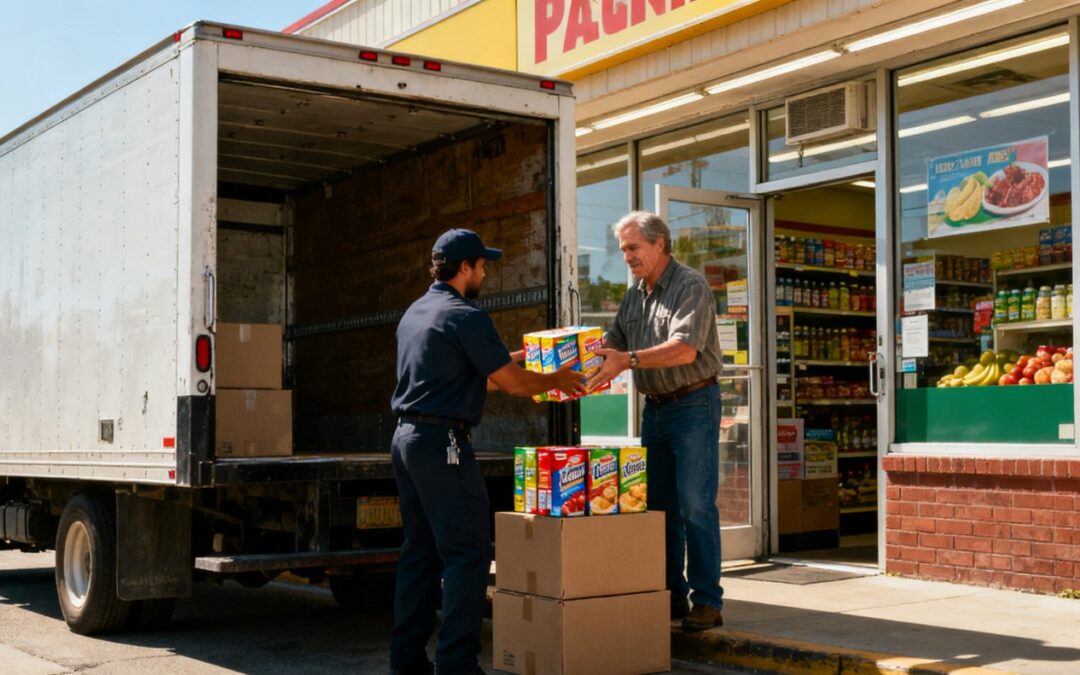
Van sales software runs the one distribution model where the vehicle is the warehouse: stock is loaded in the morning, sold and invoiced at the retailer’s doorstep, and reconciled the same evening. Because every unit of truth — what left, what sold, what came back, who paid — is created on the road, the software has to control the whole route day, not just record it. This article walks that route day end to end and lists the controls that keep direct store delivery (DSD) routes honest.
Why Van Sales Is the Hardest Route to Market to Control
Pre-sales has a paper trail by design: the order is booked today and fulfilled from a warehouse tomorrow, so the stock movement lands in a system somewhere between the two events. Van sales has no such buffer. The moment a van leaves the depot, the brand’s inventory is sitting in a vehicle on a rural road, and the only people who know what is inside it are the driver-salesman and, eventually, the paper log.
That single structural fact explains most van sales failures. Stock checks happen at the depot, not at the doorstep. Cash and credit change hands at the same moment the sale happens, against a credit limit nobody can see from the driver’s seat. Returns and near-expiry stock ride back silently at the end of the day. By the time anything is keyed into a spreadsheet, the correction window has closed — the same retailer has already been skipped twice, and the missing cartons have become a monthly argument instead of a same-day fix. Van sales software exists to close exactly that gap, and the operations that treat it as a recording tool rather than a control system keep paying for the gap anyway.
Gartner’s 2026 data and analytics predictions describe the general version of this problem: organisations that keep their evidence locked in manual, specialist workflows are choosing slower decisions by default (Gartner D&A predictions, March 2026). In a van sales operation the lag is not a productivity nuisance; it is the difference between catching a route leak on Tuesday and discovering it at month-end.
What van sales software actually replaces
A proper van sales app replaces the paper route book and the end-of-day tally — the ritual where the rep counts leftover stock, subtracts it from the load-out sheet, and hopes the cash matches. Instead of that reconstruction, every event is captured where it happens: the load-out when the van is picked, the sale and invoice at each stop, the return with its reason code, the settlement when the driver is back. The reconciliation stops being an evening detective story and becomes a report that already agrees with itself.
How Does Van Sales Software Work Across the Route Day?
The mechanics follow the vehicle, so it helps to walk the day in order. Done well, each handoff feeds the next one, and nothing depends on the rep’s memory after a twenty-stop day.
Load-out: the van becomes a stock location
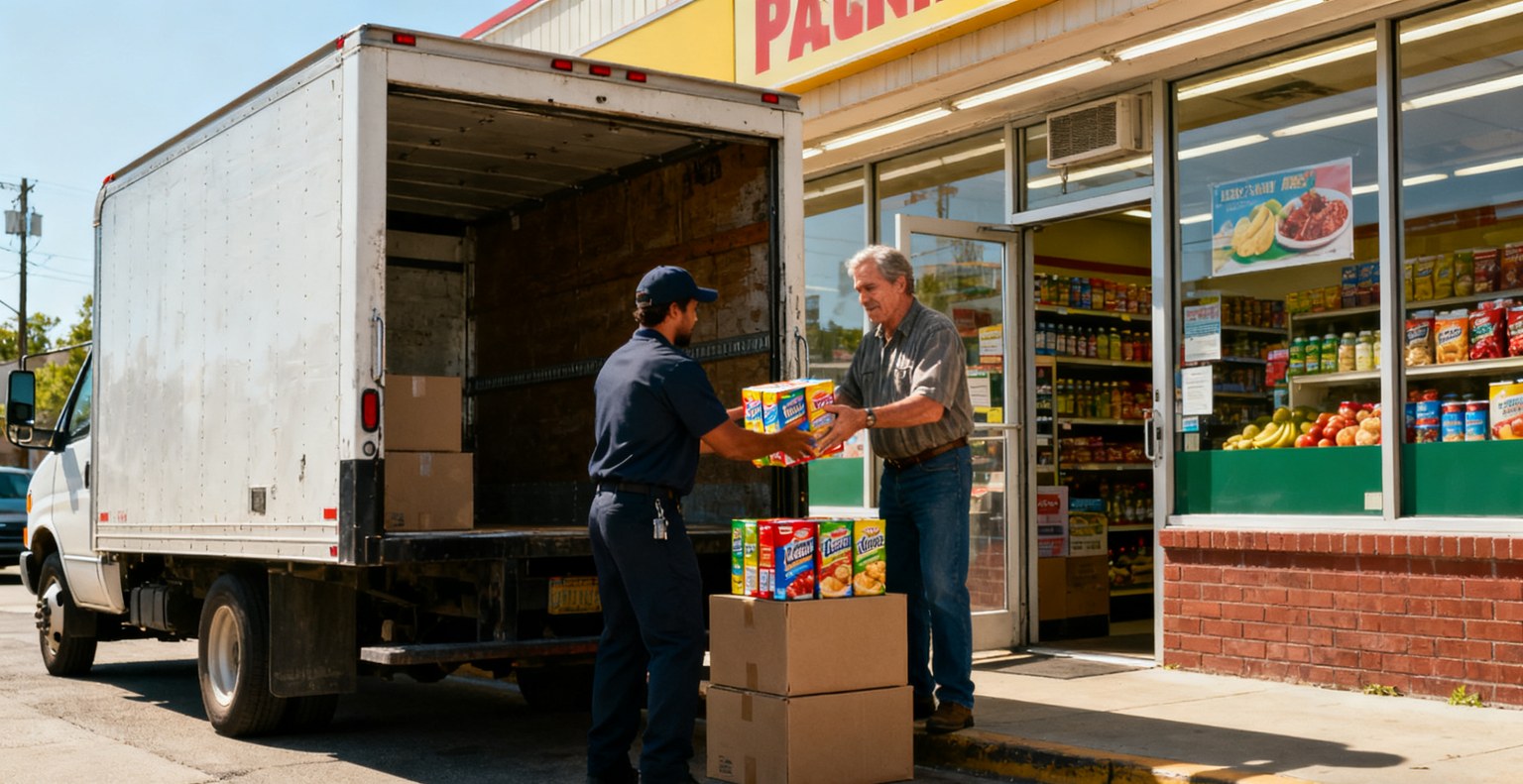
The day starts with a picking list against the planned route, and van sales software treats the van as a moving warehouse with its own stock ledger. Every case scanned or confirmed onto the vehicle is deducted from depot stock and credited to that van. Because the load-out is a transaction rather than a note, the evening reconciliation has a starting number nobody can argue with. Skip this step, and the rep spends the whole day selling from an estimate.
Sell, invoice and collect at the doorstep
At each stop the rep works from live van stock, not a printed price list. The sale is priced with any active scheme applied automatically, the invoice is generated on the spot, and the payment method — cash, mobile money, or credit against the retailer’s account — is recorded in the same action. Before extending credit, the app shows the retailer’s outstanding balance, so the decision to deliver on terms is made with the account in view rather than on trust. This is where van sales software earns its keep: the till, the ledger and the price book all ride along, so the distributor’s cash cycle shrinks along with the paperwork.
Returns and end-of-day reconciliation
Back at the depot, the driver declares unsold stock, damages and expiries with a reason code, and the system closes the loop: load-out minus sales minus returns should equal what is physically back on the van, and the cash collected should match the day’s invoices. Discrepancies are flagged the same evening, while the route is still fresh. That is the entire promise of DSD route accounting — every unit of stock has a documented life from the depot shelf to the retailer’s counter and back.
Van Sales vs Pre-Sales: Which Model Fits Which Product Line?
Most FMCG distributors run both models side by side, and the right question is not which is better in the abstract but which fits the product’s velocity and the retailer’s buying pattern.
| Dimension | Pre-sales (book today, deliver tomorrow) | Van sales (sell, deliver and invoice in one visit) |
|---|---|---|
| Best for | Larger baskets, slower-moving SKUs, planned purchases | Perishables and high-turnover lines: dairy, bakery, beverages, snacks |
| Stock visibility | Warehouse-held until delivery | Van-held all day; live stock is the rep’s only truth |
| Cash cycle | Invoiced at delivery, often on terms | Frequently settled on the spot |
| Retailer experience | Predictable, but misses impulse and top-up demand | Responsive to what the shelf actually needs today |
| Control risk | Order-to-delivery gap can be audited centrally | Stock, cash and credit all live on the road |
| Software implication | SFA order capture plus delivery scheduling | Full route-day control: load-out, doorstep sale, returns, settlement |
Because many routes are hybrids, the practical requirement is that one van sales software platform handles both motions from the same customer, stock and scheme master data — otherwise the van’s numbers and the warehouse’s numbers drift apart by design.

Which Van Sales Software Features Keep the Route Honest?
Feature lists all start to sound alike, so it is more useful to ask which controls specifically prevent the ways a route leaks. Six earn their place:
- Real-time van stock. The van’s ledger updates with every sale and return, so a rep three stops later cannot sell cases that left the vehicle an hour ago.
- Offline-first operation. Routes cross basements, rural roads and dead zones; the sale, invoice and return must all work with no signal and sync cleanly when it returns, with no duplicate entries.
- Credit visibility at the point of decision. The outstanding balance appears before credit is extended, and limits are enforced by the system rather than by the rep’s memory.
- Returns with reason codes. Damaged, expired and refused stock each carries a code and a disposition, so a route with an unusual damage pattern surfaces in a dashboard instead of in a rumour.
- Proof the visit happened. GPS-stamped check-ins paired with a photo of the actual shelf — and, importantly, a check that the photo was taken at the store rather than re-shot from an old image. Replay detection is the control that keeps the whole dataset trustworthy, because a falsified visit poisons every number built on it.
- One stock ledger from van to warehouse. The van is a stock location in the same ledger the depot runs on, not a parallel spreadsheet that gets pasted in at night. Inventory accuracy is a solved problem when the data is captured continuously — large operators using continuous machine checks have cut phantom-stock incidents dramatically compared with periodic manual counts (PYMNTS on AI inventory accuracy, June 2026) — but it only holds if every moving location posts to the same ledger.
How to Choose Van Sales Software for a Distribution Network
Selection projects go wrong when they evaluate screens instead of route days. A four-step sequence keeps the evaluation grounded.
Step 1: Map the route day before the demo
Write down how a van actually runs today: how the load-out is picked, what the rep does at a cash retailer versus a credit retailer, how returns come back, when reconciliation happens. Score every candidate against that real sequence rather than against a feature matrix, because the gaps that matter are always in the handoffs.
Step 2: Demand one stock ledger from van to warehouse
Ask specifically whether the van is a stock location in the same ledger as the depot, or a separate module that syncs. The first answer survives a mid-day stock query; the second produces two versions of the truth exactly when someone needs one number.
Step 3: Test offline in your worst network area
Run the pilot on the route with the worst connectivity, not the best. If the app can complete a full selling day offline — sales, invoices, returns, credit checks — and reconcile without duplicates, it will survive everywhere else. A demo on office Wi-Fi proves nothing about a rural beat.
Step 4: Pilot two vans before a fleet rollout
Instrument the pilot on measurable questions: does the evening reconciliation balance on the first pass, how long settlement takes, whether returns carry usable reason codes. Two vans for a few weeks will tell you more than a twelve-slide evaluation, and the same two vans become the reference route for training the rest of the fleet.
How eBest Runs Van Sales Inside One Route-to-Market Platform
eBest treats van sales software as part of the route-to-market platform rather than a bolt-on delivery app, which is what makes the controls above enforceable. Van sales and DSD execution runs on the same stock ledger, customer master and scheme engine as the rest of the network, so the van’s day reconciles against the depot’s books automatically. Around that core, several AI capabilities do specific, nameable work: AI Order Recognition reads courier slips and order documents and validates them against the shift address and date, while AI Invoice Recognition extracts the tax ID, date and amount from a photographed invoice so doorstep settlements stop relying on retyped numbers. AI Warehouse Audit extends the same photo-based recognition to stock itself — product types, quantities and share recognised from warehouse images, generating an audit report that keeps distributor and van-side stock claims honest.
The sales side gets support as well. AI Selling Story recommends what to pitch at each store based on its profile and local best-sellers, and hands the rep a ready talk-track for the doorstep conversation. Meanwhile replay detection runs on every visit photo, flagging a re-shot image before it can masquerade as today’s visit — the quiet control that makes the route’s data worth trusting. This all sits inside the same SFA platform field teams already use for visits, with distributor management keeping primary and secondary sales in one view. Brands running this stack include Coca-Cola, whose UAE field organisation went live on eBest SFA across six sub-teams from day one, alongside Carlsberg, Nestlé, Unilever, P&G, Mars and Danone — the customer results library shows how those rollouts came together.
Frequently Asked Questions
How does van sales work in FMCG distribution?
The van is loaded with stock at the depot in the morning, the driver-salesman follows a planned route, and at each retailer the sale, delivery and invoice all happen in a single visit — often with cash collected on the spot. At day’s end, unsold stock, damages and collections are reconciled against the load-out. Van sales suits perishable, high-turnover categories where retailers need frequent small top-ups rather than large pre-booked orders.
What is the difference between van sales and pre-sales?
In pre-sales, a rep books an order today and a separate delivery fulfils it later from the warehouse; the stock stays centralised until that delivery. In van sales, the vehicle carries the stock, so selling, delivering, invoicing and collection all happen at once. Pre-sales fits larger baskets and planned purchases; van sales fits impulse-driven top-ups and cash-and-carry trade. Most distributors run both, which is why good van sales software keeps both motions on shared master data.
How do you control stock on a van?
Treat the van as a stock location in the same ledger as the warehouse. Record the load-out as a transaction, deduct every sale and return in real time, and reconcile load-out minus sales minus returns against the physical stock when the van returns. Real-time deduction and same-evening reconciliation are the two controls that turn van stock from an estimate into an auditable number.
What features should a van sales app have?
Good van sales software covers the non-negotiables first: real-time van stock, offline-first operation with clean sync, on-the-spot invoicing with scheme pricing, credit limits visible before delivery, returns captured with reason codes, GPS-stamped visit proof, and one stock ledger shared with the depot. Anything else — route planning, analytics, promotion tracking — sits on top of those foundations.
Can van sales software work without internet connectivity?
Yes, and it must. Routes routinely cross areas with weak signal, so the app has to complete sales, invoices, returns and credit checks fully offline and sync automatically when connectivity returns. The test is not whether the screens work offline but whether the evening reconciliation balances without duplicates or lost entries after a full offline day.
A van sales operation does not fail because reps stop working; it fails because the route day leaves no evidence behind. Van sales software that captures the load-out, the doorstep sale, the return and the settlement as they happen turns that evidence into a route you can actually manage — and the AI checks on top of it decide whether the numbers deserve trust. Pick two vans, map their day honestly, and run the pilot where the signal is worst. Talk to the eBest route-to-market team about putting those controls on your own fleet.
Ready to Digitize Your Route to Market?
Learn how eBest’s integrated SFA, DMS, and TPM platform helps leading CPG brands turn distribution data into competitive advantage.