

Merchandising Agreements: How a Global Brewer Digitized Them
Merchandising agreements are the quiet contracts that decide whose cooler sits beside the checkout, which brand owns the eye-level facings, and whose poster hangs in the window. In a beer business running through tens of thousands of small stores, these deals were traditionally signed on paper, checked from memory, and enforced on trust — which often meant they were not enforced at all. So when Asahi set out to modernize its route to market in China, the agreement itself became the thing to fix: mobile signing, standardized execution criteria, and automatic conflict checks built into the daily workflow of its field sales team.
What is a merchandising agreement?
A merchandising agreement is a contract between a brand and a retail outlet in which the store commits to specific in-store execution — cooler placement, shelf facings, poster displays, floor stacks — and the brand funds that commitment. In the non-alcoholic beverage trade the annual version is often called a cooperative merchandising agreement, or CMA, and the mechanics are the same across categories: the brand pays for guaranteed visibility, the retailer delivers it, and both sides depend on proof.
Because visibility is physical, every clause is a testable standard. Is the cooler plugged in and running? Does the brand’s share of the shelf hold? Is the poster intact and in the agreed position? The non-alcohol beverage industry runs this as a yearly negotiation cycle, with resets concentrated in the first quarter — Gartner’s 2026 analysis of computer vision replacing manual retail counting describes how that verification burden is shifting from clipboards to phones.

The four shapes an agreement takes
In practice, brands do not run one agreement type; they run a portfolio. A required item — say, a branded cooler — every qualifying store must take. Optional items, like shelf facings or poster displays, the store chooses. Pick-N structures let a store choose any three displays from a menu of six. Bundles package several items at one price, with different terms for peak season versus off-season. Each shape carries its own pricing windows, its own renewal rules, and its own ways of colliding with the others — which is exactly where paper processes start to fail.
Why do merchandising agreements break down at the store level?
The breakdown is rarely dramatic. It is accumulation, and it looks the same in every market that still signs on paper.
The paperwork itself is the first leak. A field rep visits a store, negotiates a display package, fills in a form, collects a signature, and mails it back. The store cannot see what it already has signed; the rep cannot see it either, because last year’s contracts live in a filing cabinet or a spreadsheet nobody maintains. The result is overlap: paid months that stack on top of each other, agreements that quietly extend past their intended end, and renewals that start before the old term has expired — each one a small overpayment or a dispute waiting to happen.
The second leak is conflict. Some agreements cannot coexist: a store moving from a premium display tier to a standard tier, or switching channel types mid-contract, should not hold both at once. On paper, nothing stops it, because the person signing in the store has no view of what the system already holds.
The third leak is standards drift. The same display clause means different things in different regions when the criteria live in people’s heads instead of in a system. And when execution is not measured against a written standard, follow-up becomes opinion: the brand believes it bought facings it never received, the store believes it delivered, and there is no record either side can point to.
None of this is carelessness. It is what happens when the agreement — a structured, rule-heavy object — is handled as unstructured paper.
Case in point: digitizing merchandising agreements at Asahi
Asahi runs one of the most recognized beer portfolios in the world, and in China its field team signs merchandising agreements with a long tail of small-format stores — grocery stores, corner shops, traditional trade outlets. The specifics of the program are Asahi’s to tell, so this account deliberately stays at the level of mechanics rather than commercial terms. What is worth examining is the shape of the fix, because it generalizes to any brand managing display deals at scale.
The signing journey moved to the phone
Instead of paper forms traveling between store and office, the rep opens the store’s record in the mobile app and starts a signing request there. The system proposes the start of the paid period automatically, based on configured parameters rather than the rep’s arithmetic. The rep selects the display items the store will take, the store owner signs on the device, and the agreement enters the system of record at the moment of signature — not days later when the paperwork lands.
Execution standards became configuration, not folklore
Every display item carries its acceptance criteria inside the platform, visible to the rep before signing and to the auditor after. What counts as a compliant cooler — placement in the main traffic flow, powered on, kept clean, holding the agreed product range — is written once as a standard and applied the same way in every region. Numerical and percentage-based criteria are supported side by side, so a rule can be a simple pass/fail or a measured share. The rep can also pull up the standard for any item on the spot, which ends the “I thought it meant something else” conversation before it starts.
The system catches conflicts before the signature
This is the part worth underlining. When a rep initiates a re-signing for an agreement that was previously terminated or expired, the platform checks the old record and rolls the start of the paid period forward past its end — no manual dates, no silent overlaps. When a store switches from one agreement tier to a mutually exclusive one, the same check applies across the exclusion. The conflict that used to surface months later as a billing dispute now surfaces as a message on the screen at signing time. Because the rule is enforced by the system, it is enforced identically everywhere, which is the only way a national standard survives contact with a national field force.
How do you prove an agreed execution actually happened?
A signed agreement is a promise; execution is a photo. The natural close of the loop is capture during the routine store visit, and this is where the AI layer earns its place.
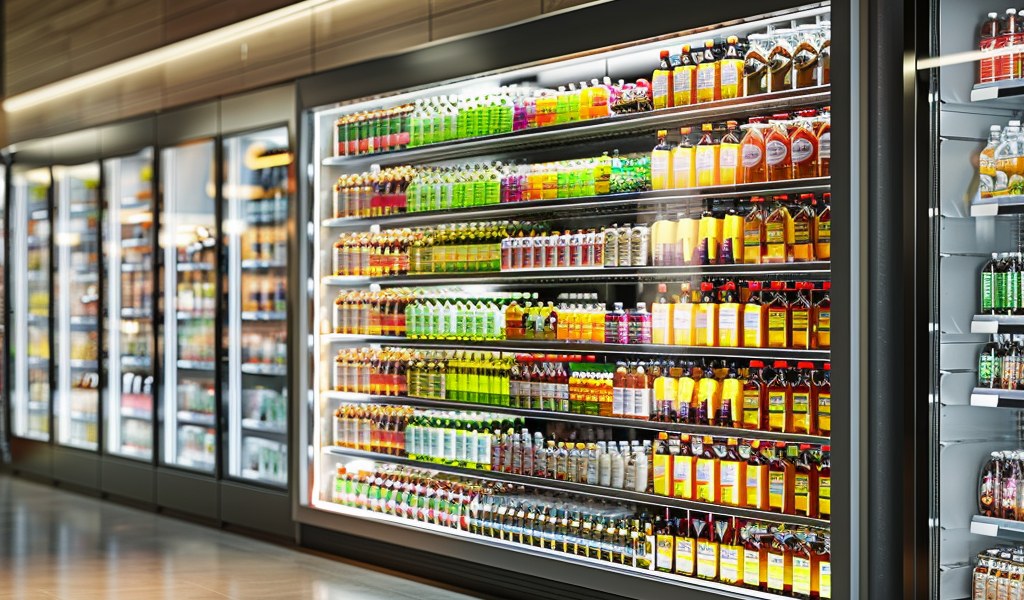
With AI image recognition built into the visit workflow, the rep photographs the cooler or the shelf, and the system reads what is there — facings, product presence, display condition — and scores it against the criteria the agreement defined. There is an appeal path when the AI misreads a scene, so the rep stays in control of the result rather than the algorithm. And because photo evidence can be faked with a screenshot or an old picture, replay detection runs on every photo step: a recaptured image gets flagged before it pollutes the compliance report. Honest reps are protected, and the dishonest path becomes expensive.
That said, verification photos are only useful if someone can actually interrogate them at scale. Managers who ask “which stores fell out of compliance on cooler placement this month?” get the answer by asking the platform in plain language, through AI Chat Report, rather than commissioning another spreadsheet. The picture of execution stops being a quarterly retrospective and becomes a running score. This is the broader shift McKinsey describes across distribution operations: the value is not collecting more field data, it is closing the loop between what was promised and what was done.
From paper to proof in four steps
- Model the agreement portfolio. Required, optional, pick-N, and bundle structures go into the platform as configuration, each with its own pricing windows and renewal rules.
- Write the standards. Every display item gets explicit, region-independent acceptance criteria the rep and the auditor both see.
- Turn on conflict validation. Overlapping paid months and mutually exclusive tiers are checked automatically at signing time, not in year-end reconciliation.
- Close the loop with photo verification. Routine visits capture AI-scored execution evidence, with replay detection guarding the integrity of every photo.
What merchandising agreement software should actually do
Plenty of tools touch this problem; few manage the agreement itself.
| Capability | Paper + spreadsheet | Generic checklist app | Agreement-aware SFA |
|---|---|---|---|
| Signing at the store | Paper form, mailed back | Not supported | Mobile signature at the moment of the deal |
| Agreement types & seasons | Manual memory | Flat task lists | Required / optional / pick-N / bundle as configuration |
| Overlap & exclusion checks | None | None | Automatic, applied before the signature |
| Execution standard | Ambiguous prose | Generic checklist | Structured criteria, same in every region |
| Proof of execution | Disputed | Photos without context | AI-scored against the signed standard |
| Traceability | Filing cabinet | Partial | Every record carries store, date, and version history |
The pattern that works treats merchandising agreements as data — structured, versioned, and enforced by rules — rather than as documents.
How eBest handles merchandising agreements end to end
The Asahi program described here runs on eBest’s sales force automation platform, with the agreement engine sitting inside the same system reps use for visits, orders, and evidence capture — so signing, standards, conflict checks, and photo verification are one workflow instead of four tools. Where the funding side of display deals needs managing, the same chain connects to trade promotion management, and the store-level records reconcile naturally with the distributor management layer upstream.
The outcomes are qualitative but consistent, and they mirror what the mechanics predict: signing happens in the store instead of after it, the same standard applies everywhere, paid periods stop overlapping, and every agreement carries its own auditable trail. For brands weighing a similar move, the client success stories page is the honest place to see how the pieces fit together in other networks.
Frequently Asked Questions
What is a merchandising agreement in the beverage industry?
It is a contract in which a retailer commits to specific in-store execution — cooler placement, shelf facings, posters, floor displays — and the brand funds that commitment. In non-alcoholic beverages the annual negotiated version is often called a cooperative merchandising agreement. The agreement is fundamentally a set of testable standards, which is why digital versions pair each clause with measurable acceptance criteria and photo-based verification.
How do brands enforce merchandising agreements at the store level?
Enforcement has two halves. The first is at signing: the agreement should be captured digitally with structured items, prices, paid periods, and automatic checks for overlapping terms or mutually exclusive deals. The second is after signing: reps photograph the cooler and shelf during routine visits, AI image recognition scores the photos against the agreed standards, and exceptions route to managers while the evidence trail — store, date, location — remains attached to every record.
What causes conflicts between merchandising agreements?
Most conflicts come from paid-month overlap and mutual exclusion. A store re-signs an agreement type it previously terminated, and the new paid period starts before the old one ends; or a store holds two tiers at once that the program rules say cannot coexist. These are arithmetic and rule problems, which is why they belong in software: the system knows each store’s agreement history and rolls start dates forward or blocks the signing before the conflict is created.
Can merchandising agreements be signed on a mobile phone?
Yes, and that is the point of digitizing them. The rep opens the store record, selects the display items, and the store owner signs on the device; the agreement enters the system of record immediately, with the paid period calculated from configured rules. Mobile signing also makes the standards visible at the moment of commitment — the rep can show the acceptance criteria for any item on the spot, which removes ambiguity from the deal before it is signed.
What should I look for in merchandising agreement software?
Look for four things. Portfolio modeling: required, optional, pick-N, and bundle structures with seasonal pricing as configuration, not custom code. Conflict validation: automatic checks for overlapping paid months and mutually exclusive tiers applied at signing. Execution standards: structured acceptance criteria shared by reps and auditors alike. And proof of execution: AI image recognition scored against the signed standard, with replay detection on the photos and an appeal path when the AI gets it wrong.
The agreement is where in-store execution is won or lost, long before anyone opens a cooler door. Brands that treat merchandising agreements as structured data — signed on the phone, standardized in configuration, validated by rules, and proven by photos — stop paying for visibility they never received. If display deals are still living in filing cabinets, that is the first workflow worth digitizing.
Ready to Digitize Your Route to Market?
Learn how eBest’s integrated SFA, DMS, and TPM platform helps leading CPG brands turn distribution data into competitive advantage.