How Coca-Cola Plans to Navigate 2026 and Build a Resilient Next 100 Years
In a recent outlook for 2026, Coca-Cola Chairman and CEO James Quincey described the macroeconomic forecast as a storm that’s set to intensify. However, his focus wasn’t on the weather itself, but on the levers the company can control. Speaking at the Morgan Stanley Global Consumer & Retail Conference, Quincey outlined the beverage giant’s strategy for sustained growth, built on four key pillars:
Granular, Purchasing Power Segmentation
With macroeconomic pressure disproportionately affecting consumers at the bottom of the income pyramid, a one-size-fits-all approach is obsolete. Quincey emphasized that the critical response is “segmentation management.” The strategy involves precisely understanding which consumers are under pressure, how their shopping behaviours and locations change, and tailoring marketing, product sizes, and distribution accordingly. This agility, tested successfully in Q3 2025, allows Coca-Cola to meet consumers where they are.
Strategic, Bolt-On Acquisitions to Fuel Innovation
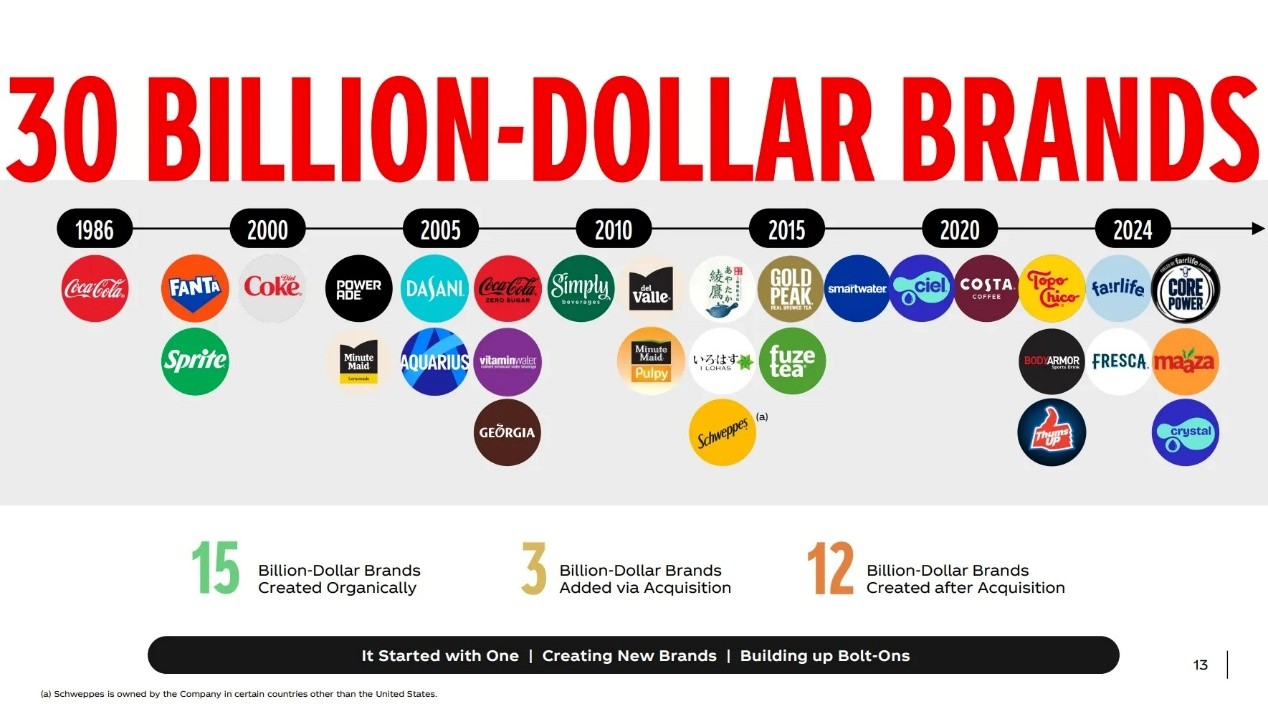
Quincey sees innovation—significantly driven by acquisitions—as a key growth lever re-emerging post-pandemic. While the beverage industry is attractive with low entry barriers, the barrier to scale is high, and most innovations fail. Coca-Cola’s strategy is to use its scale to improve innovation success by identifying and acquiring promising smaller brands. Notably, half of the company’s 30 billion-dollar brands were acquired, with 12 of them scaling to that stature post-acquisition.
Leveraging AI for Efficiency and Higher Success Rates
AI is being deployed across the business to create tangible value: from identifying consumer trends to develop new products (arriving in 2026), to creating more efficient and personalised marketing campaigns (like for the FIFA World Cup). In sales, AI analyzes data to suggest orders for small stores, boosting revenue. Quincey aptly notes that applying AI to a broken process only gets you to a bad outcome faster, underscoring the need for parallel internal process improvements.
Cultivating a Culture of “Constructive Discontent”
Perhaps the most critical element for long-term success, according to Quincey, is the culture. He champions the notion of “staying discontented,” a principle rooted in avoiding complacency. This culture ensures that the company, while proud of its brands and victories, remains focused on winning the next year and the next decade. He linked this directly to robust succession planning, stating that with this ingrained mindset, Coca-Cola is positioned not just for the next year, but for the next 140 years of resilient growth.