
A Day with an AI Copilot for Field Sales: Hour by Hour
An AI copilot for field sales is software that rides along a rep’s entire store day — building the route in the morning, suggesting the basket at the counter, checking the shelf photos, and writing the evening report — while the rep keeps every decision that involves a human being. That definition separates it from the call-recording copilots built for inside sales: in route to market, the “call” is a face-to-face visit in a small store with shaky signal, and the copilot has to work offline, on a phone, in under thirty seconds per stop. Here is what that actually looks like, hour by hour, on an ordinary Tuesday.
What Does an AI Copilot for Field Sales Actually Do?
Before the narrative, the short version. A copilot earns its name by doing four kinds of jobs across the day:
- Plan: sequence today’s stores by priority — order recency, declining sales, overdue collections — not just by geography.
- Prepare: for each stop, surface last visits, the suggested order basket, and a pitch talk-track the rep can actually say out loud.
- Protect: verify that the data coming back from the field is real — GPS, timestamps, and photo integrity checks that flag recycled images.
- Report: turn the day into answers. Managers ask questions in plain language; the copilot answers from live execution data.
Notice what is missing from that list: closing. The copilot never closes. It hands the rep a prepared, verified, well-timed store visit — and the conversation does the rest. The timing matters too: NVIDIA’s 2026 retail and CPG survey found 47% of organizations using or assessing agentic AI, which means the field copilot conversation has moved from “whether” to “how”.
7:40 AM — The Route Builds Itself
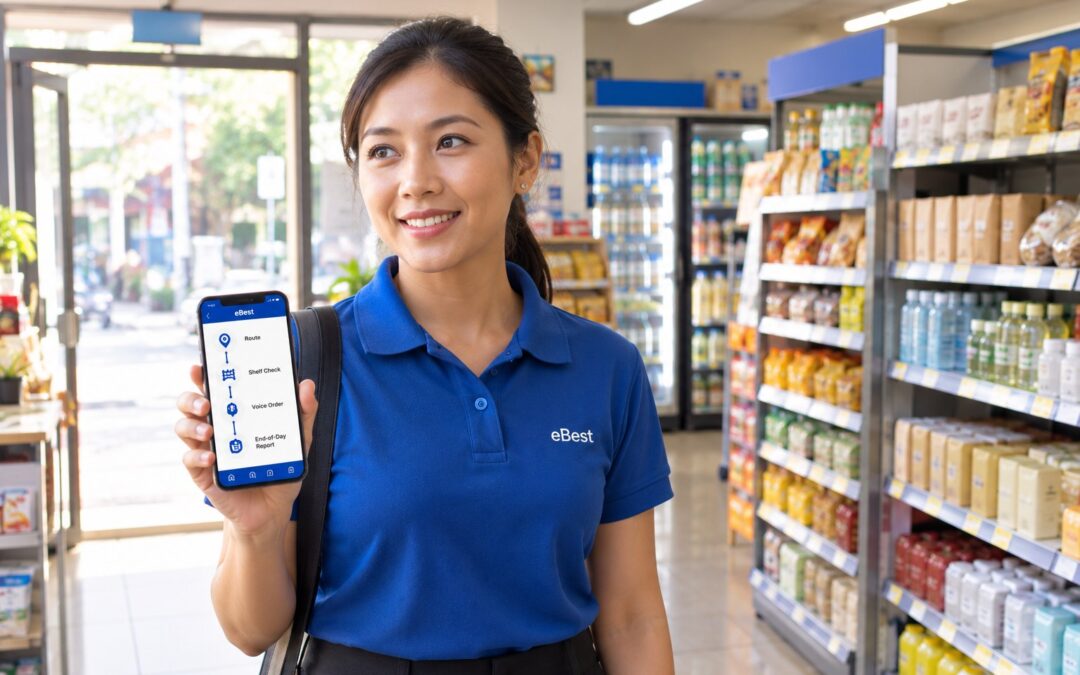
Maya opens the app over breakfast coffee, and the morning shows exactly what an AI copilot for field sales is for: removing the guesswork before the first visit. Today’s route is already sequenced, and not the way she would have drawn it. The AI route optimization put a declining store first because its sales have slipped three weeks straight, pushed a collection stop next to a store that just paid, and left her usual Thursday favorite for later — that owner orders on Fridays anyway.
She drags one stop and taps accept. The plan re-sequences around her change in seconds. Under the old way, she’d have spent the first market hour improvising after finding out her second stop was closed for renovation; the copilot already knew, because last week’s visit data said so.
9:15 AM — First Store, Shelf First
At the mini-market, Maya checks in. The visit flow opens on the shelf task: photograph the beverage wall. She snaps two photos. Perfect store image recognition counts the facings, scores her share of shelf against the contract, and flags that the end-cap display promised for this month is missing.
Because the appeal workflow is built in, she isn’t forced to argue with an algorithm: she taps the one count she disagrees with, the photo re-checks, and the corrected score lands in the system. Thirty seconds of her time, an honest record in the platform.
10:00 AM — The Basket She Didn’t Have to Guess
This stop is where an AI copilot for field sales earns its keep commercially. Before she walks to the counter, the copilot shows the suggested basket: two SKUs this store historically takes, one new launch the store profile says fits, each with a reason. There’s a talk-track too — AI sell-in suggestion doesn’t just list products, it drafts what to say, because a suggestion without words is just a chart.
Maya pitches. The owner takes the two regulars, hesitates on the launch, and takes half the suggested quantity. That’s a real outcome — better than last cycle. As a result, the copilot logs it as feedback, and next week’s suggestion for this store will be smarter because a human decision just trained it.
12:30 PM — The Photo That Gets Rejected
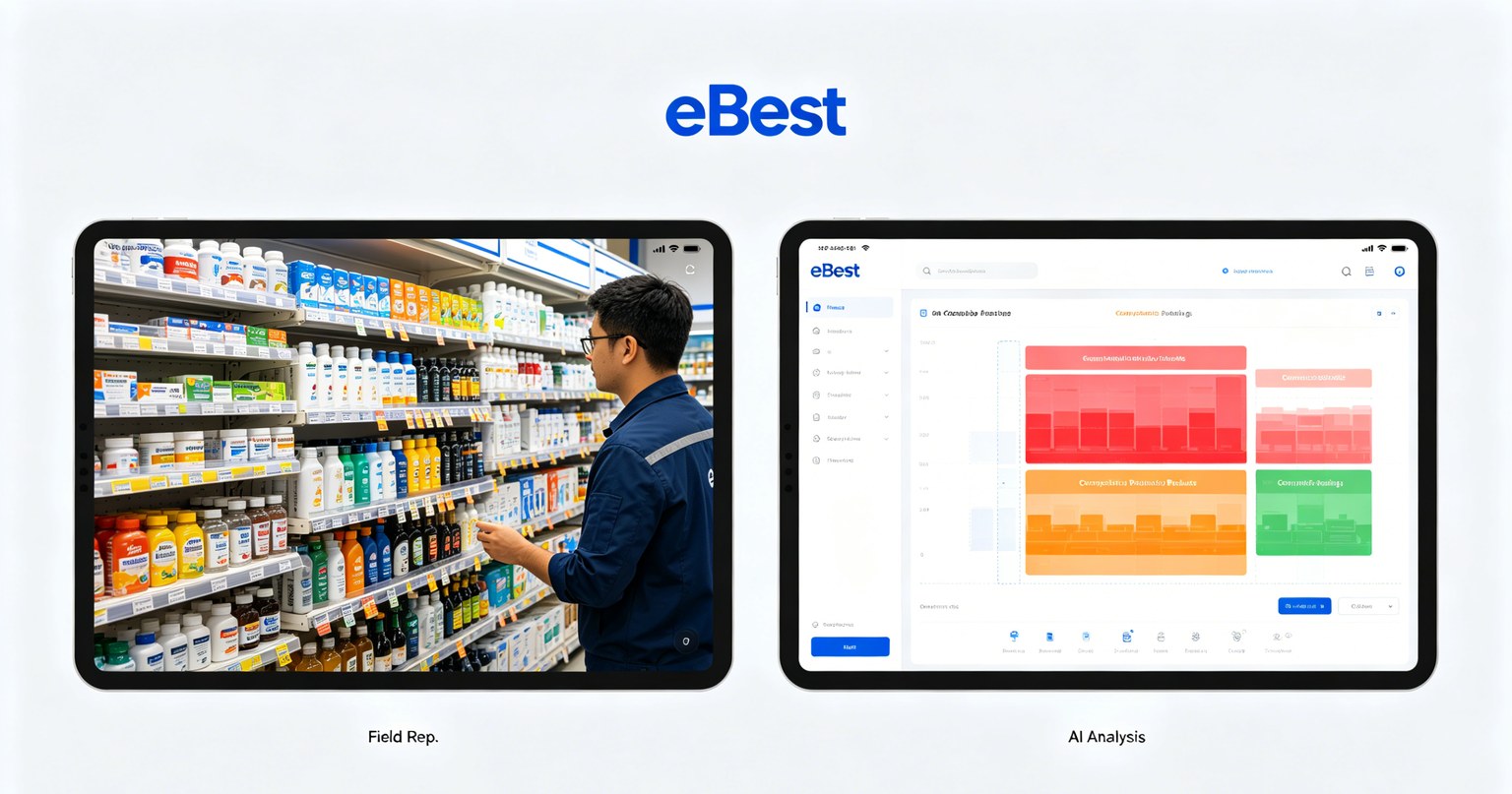
Over a quick lunch, a rep on another team learns why integrity matters. He submits a check-in photo taken yesterday, hoping to save a drive. The replay detection layer flags it instantly: “this photo may be a replay.” He can confirm-submit with the flag attached, or retake. He retakes.
That loop is invisible when nobody cheats, and that’s the point — honest reps just see a fast, fair system, while faked visits stop polluting the numbers the whole company plans on.
3:00 PM — A Store That Isn’t on the Map
One stop — a new kiosk — doesn’t exist in the outlet master. Under the old routine, she’d log it as “other” and lose the history. Instead, with the copilot, Maya types the name, and AI store matching suggests the likely match from nearby outlets with a similarity score, or lets her register the new store against the right route. Coverage stays complete, and the visit counts where it should.
5:30 PM — The Report Writes Itself
Back at the car, Maya reviews the day: ten visits, the shelf scores, the accepted basket, the flagged replay, the new outlet. There is nothing to type. The visit records are the report. This is the quiet payoff of an AI copilot for field sales — the day ends when the stores end, not when the paperwork ends.
Across town her manager asks the platform a plain question — “which of Maya’s stores declined this week?” — and the AI chat report answers from live data in seconds, with AI KPI suggestions on what to fix first. No Monday spreadsheet. No waiting.
With a Copilot vs Without: The Same Day, Side by Side
That was one day. The compressed version of what an AI copilot for field sales changes — and what it leaves untouched — looks like this:
| Moment | Without a copilot | With a copilot |
|---|---|---|
| 7:40 AM | Improvise the route from memory and a printout | Prioritized route, re-sequenced in seconds |
| 9:15 AM | Eyeball the shelf, memorize, write it up later | Photo → counted facings, scored compliance, appealable |
| 10:00 AM | Pitch from habit and hope | Suggested basket + talk-track, tuned per store |
| 12:30 PM | Nobody knows which photos are real | Replay detection guards the dataset |
| 5:30 PM | Type the visit reports, half from memory | Reports already written; manager asks, AI answers |
Where does the copilot stop and the rep start?
At the conversation, every time. The copilot prepared the pitch; Maya delivered it and read the owner’s hesitation. It proposed the basket; she negotiated it down to half and preserved the relationship. It built the route; she decided the declining store deserved ten extra minutes. An AI copilot for field sales is judged by one honest metric: how much more of the rep’s day is spent face to face with the store owner than it was last quarter.
How to Pilot an AI Copilot in One Territory
- Pick one territory with honest baseline data. You need a “before” picture — visits per day, order value, selling-time share.
- Switch on plan + report first. Route optimization and conversational reporting give visible time back in week one; shelf recognition follows once the team trusts the system.
- Run four weeks and inspect the appeals. The appeal and correction log tells you whether reps are engaging with the AI or routing around it.
- Expand by the numbers. If selling-time share and productive calls rise while headcount holds flat, roll the copilot to the next territory on the same terms.
Frequently Asked Questions
Q1: What is an AI copilot for field sales?
It is a mobile assistant embedded in the field sales workflow that plans the day’s route, prepares each store visit with suggested baskets and pitch talk-tracks, verifies the data reps capture (GPS, photos, replay checks), and converts it all into plain-language answers for managers. Unlike inside-sales copilots that assist live phone calls, it works offline, on a phone, at real store visits.
Q2: How is an AI copilot different from a regular SFA app?
A traditional SFA app records what happened; a copilot changes what happens next. It recommends the route order, drafts the pitch, flags the recycled photo, and answers manager questions conversationally. The rep stays in control — every suggestion is advisory, and correction loops keep the human in charge of the data. McKinsey’s 2026 B2B sales research describes the same pattern at industry scale: agents take over the heavy lifting so sellers can build trust.
Q3: Does an AI copilot work without mobile signal?
It has to — that’s a hard requirement in traditional trade. Visit flows, order capture, and photo checks run on the phone offline and sync when the rep is back in signal. Any vendor demo that skips the airplane-mode test hasn’t understood the job.
Q4: Will a copilot replace field reps?
No — it replaces the paperwork around the visit. Route planning, reports, photo scoring, and pitch preparation are what get automated; the negotiation, trust-building, and reading of the store owner stay human. The measurable effect is selling-time share, and that’s the number to watch in any pilot. If the deeper question is whether brands will cut field teams once an AI copilot for field sales is in place, the coverage math usually points the other way: more stores get visited, not fewer.
Q5: How long does it take to see value from an AI copilot for field sales?
The time-back effect shows in the first week — reps stop typing reports and stop improvising routes. Commercial effects (bigger, better-targeted baskets; higher compliance) typically show within one to two order cycles, once suggestions have enough feedback from real rep decisions to tune themselves.
The technology in this day isn’t speculative — every capability in it ships in eBest’s field sales platform today, and the same loop extends into direct store delivery when the rep also drives the van. The measure of an AI copilot for field sales was never how futuristic the demo looks. It’s how much of the day ends up spent where the money changes hands: across the counter, with the owner, in person. See how that plays out in real deployments.
Ready to Digitize Your Route to Market?
Learn how eBest’s integrated SFA, DMS, and TPM platform helps leading CPG brands turn distribution data into competitive advantage.