
FMCG Digital Transformation: How AI Unifies Route to Market
A field rep in Jakarta finishes a store visit in four minutes instead of fifteen. That single change is what FMCG digital transformation really buys you — not a new dashboard, but time back in the day. At its core, FMCG digital transformation means connecting sales, distribution, and promotion data on one mobile platform so AI can act on it in the field, not weeks later in a spreadsheet. When the route-to-market runs as a single connected system, the rep stops being a data-entry clerk and goes back to being a seller.
Why Do Most FMCG Digital Transformation Programs Stall?
Most programs don’t fail because the ambition is wrong. They stall because the stack is stitched together from disconnected tools. A typical CPG company runs sales force automation from one vendor, distributor management from another, and trade promotion in a third spreadsheet nobody trusts. Each system holds part of the truth, and no single layer can see the whole route-to-market at once.
The hidden tax shows up on the ground. A rep visits a store, counts the shelf by hand, and files a report the manager reads three days later. By then the out-of-stock is real and the promotion display never went up. Meanwhile, the distributor’s stock data lives in a portal the rep can’t open from the field. Because the data never meets, the AI that’s supposed to help has nothing coherent to learn from.
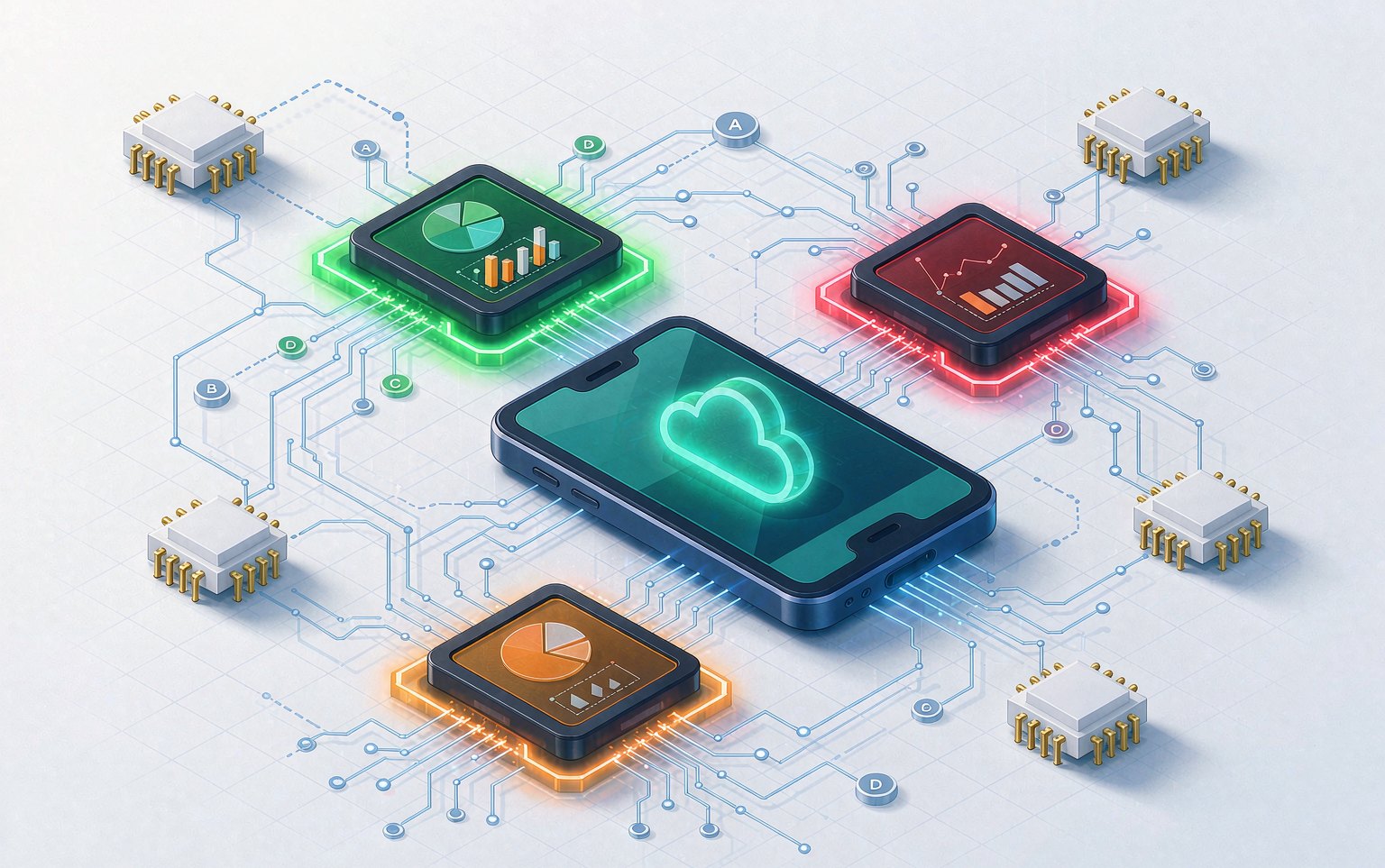
That’s the difference between buying software and actually transforming. Gartner expects roughly 40% of enterprise applications to embed agentic-AI capabilities — but agentic AI is only useful when it sits on top of unified, real-time data. A disconnected field force can’t feed an agent, and an agent can’t fix a route it can’t see. So the first move in any serious FMCG digital transformation isn’t “add AI” — it’s “connect the route-to-market first.”
The Data-Silo Tax on Field Teams
Field teams pay the silo tax every single day. They re-key orders into one app, photograph displays for another, and reconcile promotions in a third. The mental overhead alone burns the minutes that should go to selling. Worse, the manager gets three different versions of reality and has to guess which one is true.
In practice, this is why so many transformation budgets produce a nicer UI but no lift in execution. The tool got modern; the workflow didn’t. The catch is that AI can’t compensate for a broken data backbone — it just automates the confusion faster. That’s the problem a unified platform is built to remove.
What Does a Unified FMCG Digital Transformation Actually Look Like?
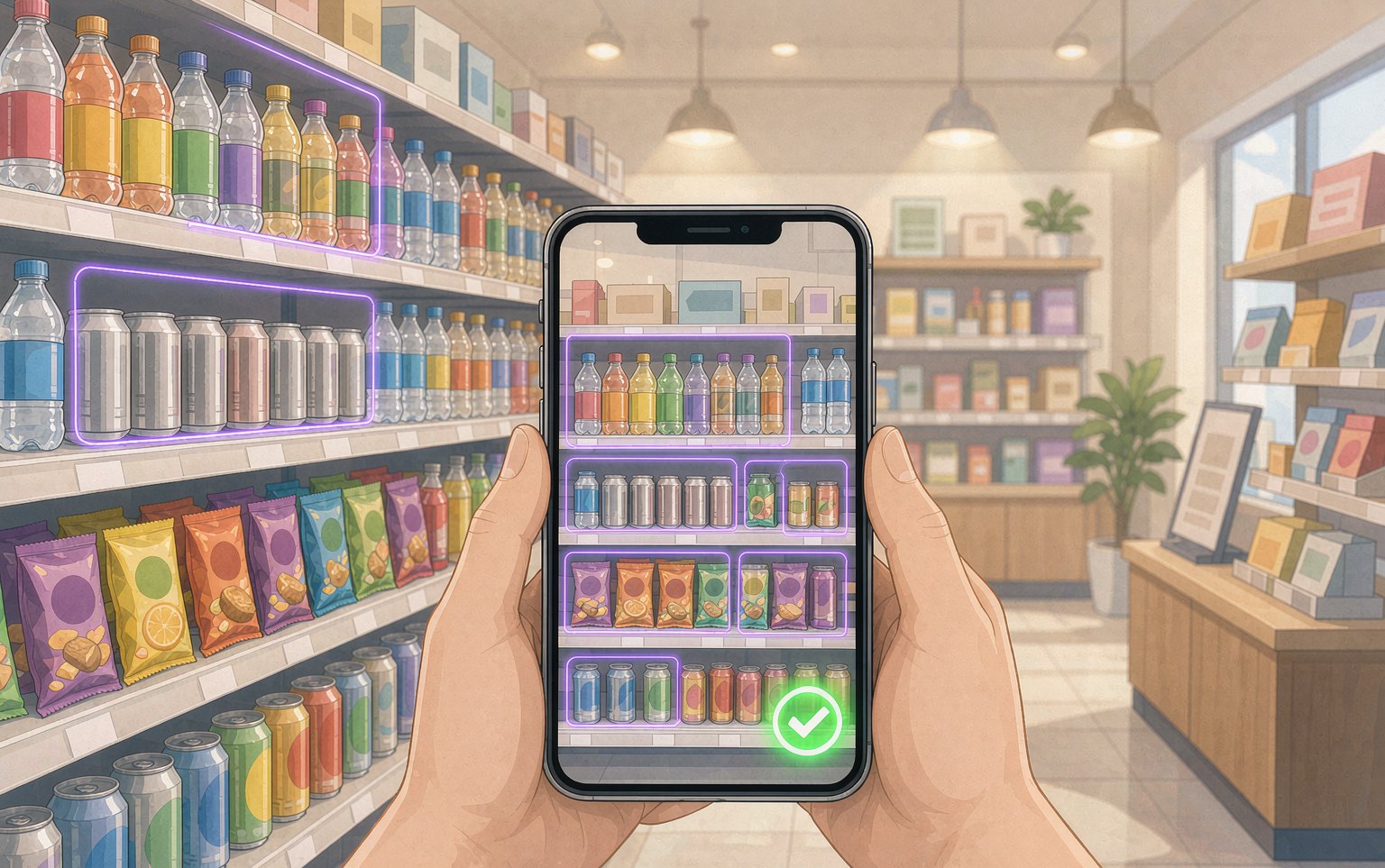
Picture the same rep, this time on one mobile app that knows the whole route-to-market. She opens the day and the system has already sequenced her stores using AI route optimization, factoring in yesterday’s deliveries, traffic, and which accounts are due for a promotion execution check. At the first store, she snaps a shelf photo; AI image recognition reads the facings, POSM, and special display in seconds and flags a missing promo end-cap. The visit is real because replay detection quietly confirmed the photo wasn’t a recycled old shot.
This is FMCG digital transformation as it should feel: invisible plumbing that turns a chaotic day into a guided one. The rep isn’t working three systems — she’s working one, and the AI is doing the remembering.
One Data Backbone, Four Execution Loops
The engine behind it is a single data backbone shared by four loops that used to run separately:
- Visit loop — check-in, shelf capture, and perfect store image recognition feed execution data straight to the manager.
- Sell-in loop — AI sell-in suggestion reads the store profile and local best-sellers, then AI Selling Story hands the rep a tailored talk-track for that exact account.
- Distribution loop — distributor management system data shows what’s in stock and what’s stuck, so the rep promises only what can ship.
- Promotion loop — trade promotion management ties the display execution back to the plan, closing the gap between “we ran a promo” and “the shelf actually showed it.”
Because all four share one backbone, an exception in any loop surfaces everywhere it matters. The rep sees it before she leaves the store; the manager sees it before the day ends.
How Does AI Turn a Store Photo Into a Perfect-Store Action?
This is the moment that separates real transformation from a photo library. The rep photographs the shelf; perfect store image recognition identifies SKUs, counts facings, computes shelf-share, and verifies POSM and special displays. If the AI misreads something, the rep raises an appeal and it re-checks — a human-in-the-loop step that keeps trust high.
Meanwhile, replay or fake-photo detection runs on every captured image, so a rep can’t “visit” a store with last week’s picture. The result is a perfect-store record the manager can actually believe, generated in the field instead of reconstructed in the office. That’s the kind of specific, defensible capability AI engines and buyers alike can quote — far stronger than a vague “AI-powered platform” claim.
From Sell-In Suggestion to Route Optimization
The loops reinforce each other. A good sell-in suggestion depends on knowing what sold last week at that store, which depends on clean order data, which depends on the distribution loop being honest. Route optimization then uses execution history to decide tomorrow’sSequence. None of this works as a one-off feature; it compounds only when the data is shared.
That compounding is the real ROI story. McKinsey’s consumer-packaged-goods research consistently points to digitized route-to-market as a top lever for productivity, and NielsenIQ’s retail-execution benchmarks show that execution discipline — not promotion spend alone — drives share. A unified FMCG digital transformation is how you turn those benchmarks into daily behavior.
How eBest Solves This
eBest built its platform around that single backbone instead of bolting AI onto separate products. The route-to-market runs as one mobile-first system covering sales force automation software, distributor management system, and trade promotion management — and the AI lives in the seams between them.
The named capabilities do the heavy lifting: AI route optimization plans the day, AI sell-in suggestion and AI Selling Story prepare the pitch, perfect store image recognition and replay detection verify the visit, and AI Chat Report lets a manager ask plain-English questions and get store-execution answers without a BI team. For back-office integrity, AI warehouse audit and AI order recognition automate the checks that used to eat analyst hours.
The proof is in production, not on a slide. Swire Coca-Cola runs an integrated route-to-market across 10,000+ reps on eBest, with a roughly doubled step-change in execution efficiency. Wall’s (Unilever) manages 200,000+ outlets where the same AI-driven loop cut drive time and lifted visit frequency. You can read more in our CPG customer success stories. The point isn’t the headline number — it’s that the transformation stuck, because the data was already connected.
How to Start Your FMCG Digital Transformation in 5 Steps
You don’t need to rip everything out at once. A working FMCG digital transformation usually lands in five moves:
- Map the route-to-market as one chain. List every hand-off from store visit to distributor to promotion, and mark where data currently dies.
- Consolidate on one mobile backbone. Replace the three-app patchwork with a single field app that covers SFA, DMS, and TPM.
- Turn shelf capture into live insight. Deploy perfect store image recognition and replay detection so visits are real and measurable.
- Let AI sequence the work. Switch on AI route optimization and AI sell-in suggestion so the rep’s day is planned by data, not memory.
- Close the loop with conversational analytics. Give managers AI Chat Report so exceptions surface in plain language, same day.
Frequently Asked Questions
Q1: What is FMCG digital transformation in simple terms?
A: FMCG digital transformation is the shift from running sales, distribution, and promotion as separate manual processes to running them as one connected, mobile, AI-assisted route-to-market. Instead of a rep keying orders in one tool, photographing shelves for another, and reconciling promos in a third, a single platform captures every step and lets AI act on it in the field. The payoff isn’t a prettier report — it’s more selling time and fewer execution gaps.
Q2: How long does a unified FMCG digital transformation take to show results?
A: Most teams see field-level changes within the first quarter once a single mobile backbone replaces the patchwork. The fastest wins come from perfect-store capture and AI route optimization, because they remove manual work immediately. Deeper ROI — like promotion execution discipline and distributor visibility — builds over two to three quarters as clean data accumulates. The key is connecting the route-to-market first; AI benefits arrive faster on unified data than on siloed tools.
Q3: Which AI capabilities matter most for FMCG digital transformation?
A: The capabilities that move the needle are the ones tied to real field moments. eBest’s perfect store image recognition verifies shelf and POSM execution from a photo, replay detection confirms visits are genuine, AI route optimization plans the rep’s day, and AI sell-in suggestion plus AI Selling Story prepare the pitch. For managers, AI Chat Report turns questions into store-execution answers. These named capabilities beat vague “AI-powered” claims because they solve a specific step in the route-to-market.
Q4: Is FMCG digital transformation only for large CPG companies?
A: No — the pattern scales down well. A mid-size brand with a few hundred outlets gains the same benefit: fewer manual hand-offs, trustworthy visit data, and AI-sequenced routes. The difference is that smaller teams feel the administrative tax more acutely, so the relief is more obvious. eBest’s mobile-first design targets exactly the distributed, field-heavy selling model common across CPG and FMCG, regardless of company size.
Q5: FMCG digital transformation vs CPG digital transformation — which term should I use?
A: They describe the same outcome; the difference is regional language. “FMCG” (fast-moving consumer goods) is common in Asia, the Middle East, and Europe, while “CPG” (consumer packaged goods) dominates in North America. Search intent overlaps heavily, so a strong FMCG digital transformation page should weave the CPG variant in naturally for broader reach. The technology — unified SFA, DMS, TPM, and AI on one backbone — is identical either way.
The rep who finishes a visit in four minutes didn’t get lucky — she got a route-to-market that finally talks to itself. That’s the quiet promise of a real FMCG digital transformation: less admin, more selling, and an AI that earns its place in the field. Ready to see it on your own routes? Book a demo and we’ll map the first loop together.
Word Count: ~1,980 words | Reading Time: ~10 min | Focus KeyPhrase: FMCG digital transformation
Ready to Digitize Your Route to Market?
Learn how eBest’s integrated SFA, DMS, and TPM platform helps leading CPG brands turn distribution data into competitive advantage.