

AI Sales Training: How CPG Field Teams Close the Ramp Gap
AI sales training uses a simulated buyer — and, in consumer goods, a simulated store situation — to let a field rep rehearse the exact conversation they are about to have, then scores the attempt and returns coaching within minutes. For a route-to-market team it is less an HR initiative than a coverage fix: the months a new rep spends learning on live stores get compressed, because practice no longer has to wait for a manager to ride along.
Why Field Sales Training Breaks at CPG Scale
Here is the thing most enablement programmes get wrong. They import a training model built for people who sit at desks, and then wonder why it evaporates in an aisle. An inside sales team can rehearse a call, record it, and have a manager dissect it thirty seconds later. A CPG field rep makes the decision standing up, in a store, in front of a person who has thirty seconds and a shelf that needs facing. There is no recording, no debrief, and usually no one watching at all.
That asymmetry is why field sales training fails in a specific and predictable way. The knowledge transfers. The judgement does not.
So the cost lands where it is hardest to see. According to SPOTIO’s 2026 State of Field Sales survey, 44% of field sales teams take three or more months to ramp a new hire to full productivity, and on high-turnover teams only 47% of new reps reach full productivity within two months, against 70% on low-turnover teams (SPOTIO field sales research). The same data shows field reps spend only 43% of their time actually selling — the rest goes to travel, admin and preparation.
Read those two numbers together and the problem sharpens. A rep who is not yet productive is still consuming a territory. Coverage is being paid for and not delivered, and in markets where a single rep carries hundreds of outlets, an under-ramped rep is not a personal performance issue — it is a distribution gap.
Meanwhile, the macro case for fixing this has become unusually well documented. In a May 2026 study of 227 chief sales officers, Gartner found that organisations providing sellers with AI-enabled next best actions are 2.6 times more likely to achieve commercial growth, and — more pointedly for this discussion — that organisations prioritising upskilling sellers on AI are 2.4 times more likely to achieve strong revenue growth (Gartner sales research, May 2026). That second multiplier is the one worth pinning above a capability manager’s desk. The tool is not the investment. The person using the tool is.

The Ramp Gap Is a Coverage Problem, Not an HR Problem
Most brands file sales onboarding under HR, and then measure it with completion rates. That framing is why the problem survives. A completion rate tells you that a rep sat through the module; it says nothing about whether that rep can walk into a store, read the situation, and recover when the store owner pushes back on a promotion.
Reframe it as coverage and the arithmetic changes. If a territory carries 300 outlets and a rep reaches full productivity in month four instead of month two, the brand has absorbed two months of partial coverage across 300 outlets. No training completion dashboard will ever show that number, because the loss is an absence rather than an event.
Gartner’s analysts make the same argument from the enablement side: value has moved away from static content and periodic sessions, toward guidance that reaches the seller in the workflow where the work actually happens (Gartner enablement research, April 2026). For a field team, that workflow is the visit — not a learning portal somewhere else.
How Does AI Sales Training Work for a Field Rep?
The mechanics are less exotic than the category name suggests, and they matter more than the model. A working AI sales training loop has four motions: seed the scenario, rehearse the conversation, score it against execution criteria, and repeat until the behaviour holds. What separates a field-ready implementation from a demo is where the scenario comes from.
Pick the scenario from the outlet, not from a persona
Generic role-play products ask you to configure a buyer persona — a sceptical economic buyer, a procurement lead, a VP of Finance. That works when your seller is on a call with a named buyer whose role you know in advance. It falls apart in traditional trade, where the “persona” is a store owner whose objection is not about budget cycles but about whether the promotion is worth the shelf space and whether the last delivery arrived on time.
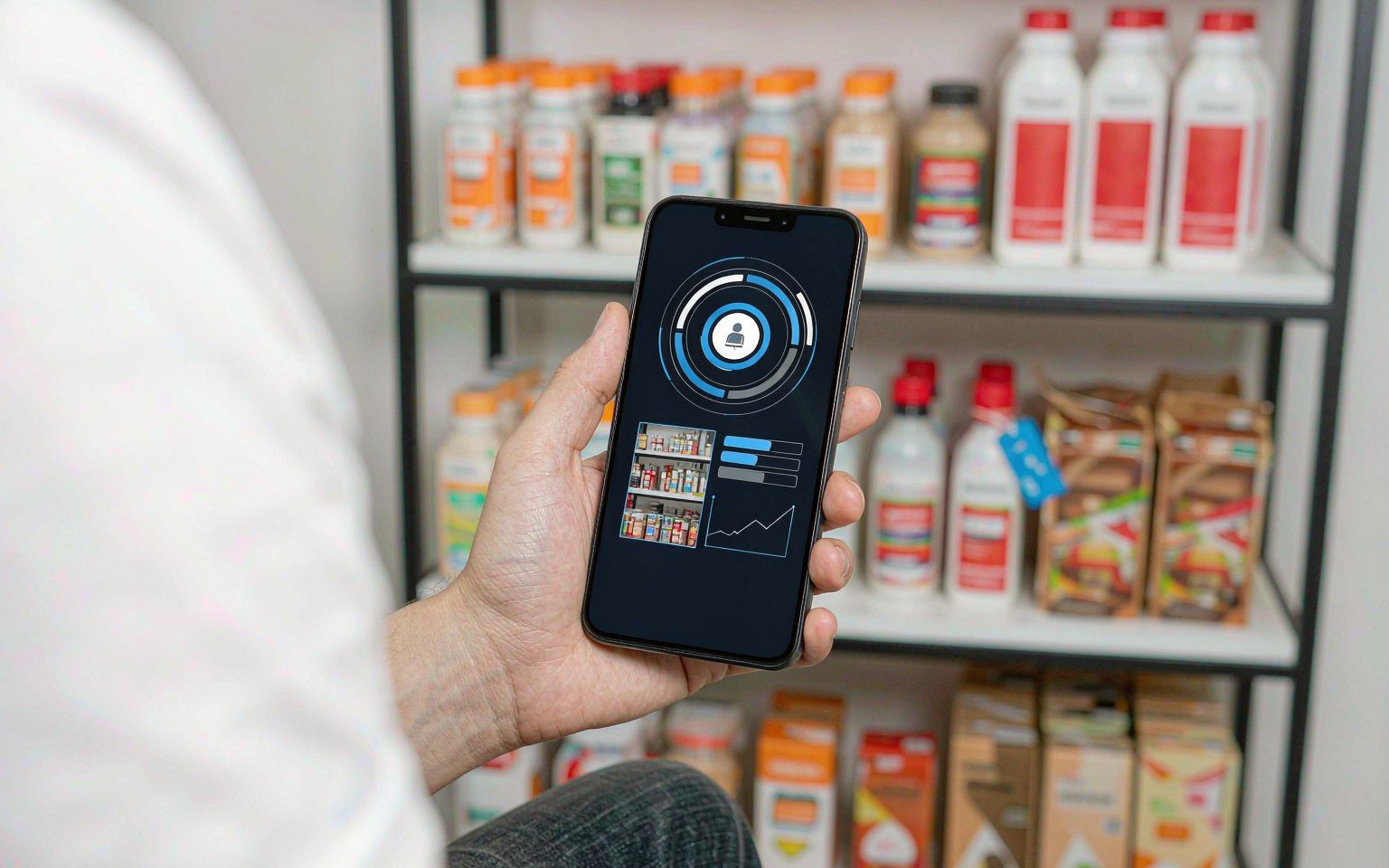
When the scenario is sourced from the outlet instead, the rep practises against their own territory. So the practice object becomes the shelf photo from last visit, the outlet’s own order history, the SKU that has been quietly declining, and the display commitment that was agreed and never delivered. That is not a simulation of selling. It is a rehearsal of Tuesday.
Rehearse the exact pitch, then get scored on it
This is where a training capability stops being standalone. Once the system already generates a store-specific recommendation and pitch, the rep can rehearse that pitch before walking in, and the AI plays the store owner rather than a generic gatekeeper. For a beverage or dairy route, the objections that matter are practical ones: not enough space, stock still on hand, the price of the promotion, the display that blocks the aisle.
Scoring is the part buyers underweight. A scorecard built on talk-to-listen ratio is nearly useless for a rep who never makes a call. What a field capability manager needs is scoring against things the business already tracks — did the rep open with the display opportunity, did they handle the space objection, did they close with a specific order. Then coaching points to a named behaviour rather than a general instruction to improve.
Repeat on the rep’s own time, not on the manager’s calendar
The structural constraint in field coaching has never been willingness. It is arithmetic. A manager with fifteen reps and thirty minutes each spends more than seven hours a week coaching, and that is the first thing sacrificed when the quarter tightens — which is exactly when coaching matters most.
On-demand practice removes the scheduling dependency. Because sessions are repeatable and scored consistently, a new rep can run the same store scenario five times over a weekend and watch the score move. Mindtickle’s 2026 enablement research points the same direction, finding that top-selling reps complete roughly twice as many practice repetitions as the rest of the team. Repetition, not intensity, is the variable that moves.
AI Role-Play Sales Training vs Traditional Coaching: What Actually Transfers?
There is a fair criticism of this category, and it deserves an answer rather than a deflection: reps can get good at performing for a bot without getting better at selling to a person. That risk is real whenever the simulated buyer is invented. It shrinks sharply when the scenario is drawn from the rep’s own outlet data and the scoring rules are the same ones the business uses to judge execution.
| Dimension | Ride-along coaching | Desk-based role-play tools | AI sales training inside the RTM platform |
|---|---|---|---|
| Scenario source | Whatever store the day produces | Configured buyer personas | The rep’s own outlet: shelf history, order data, agreed displays |
| Availability | Manager calendar only | On demand | On demand, on the phone already in the rep’s pocket |
| Repetitions per rep | A handful per cycle | Unlimited | Unlimited, between visits |
| Scoring basis | Manager memory, subjective | Generic rubric: talk ratio, filler words, pacing | Execution criteria the business already tracks |
| Relevance to traditional trade | Depends on the route that day | Low — modelled on call-based selling | High — store owner objections, space, displays, price |
| Reaches distributor salesmen | Rarely | No | Yes, when they are users of the same platform |
| Consistency across regions | Varies by manager | Consistent | Consistent, in local language |
| Follow-through to a live visit | Verbal | None | The rehearsed pitch is the pitch that gets delivered |
The last row is the one that decides renewal. Training that ends when the session ends is a content library with a score attached. Training that feeds directly into the conversation the rep is about to have is part of the operating system.
Can AI Sales Training Reach Distributor Salesmen You Do Not Employ?
In most emerging markets the answer determines whether a training programme has any reach at all. A brand may directly employ a few hundred field reps and sell through distributors who employ thousands of salesmen. Those salesmen are the ones standing in front of the shopkeeper, and they are outside the reach of any HR-owned training platform.
This is where an AI sales training capability has to be judged on where it lives. If it exists inside the platform that distributors already use to book orders and log visits, coverage follows the channel rather than the payroll. A distributor salesman opens the same app, sees the same product story, and practises the same objection handling as a brand-employed rep. Nothing extra to licence, nothing to integrate.
Practically, three requirements make or break that reach. First, it has to work on a mid-range Android phone, because that is the device in the market. Second, it has to function offline or near-offline, since rural routes do not wait for signal. Third, it has to operate in the local language, because objection handling practised in a second language does not survive a real store.
Get those three right, and training stops being an HR programme for the headcount you control and becomes a capability layer across the whole route to market. Get them wrong, and the distributor’s team learns by trial and error in front of your customers — which is how inconsistent pricing, missed displays and quiet SKU declines begin.
How eBest Puts AI Sales Training Inside the Route-to-Market Platform
eBest treats rep capability as part of the field platform rather than a separate learning system, which is what makes the scenarios specific instead of generic. The scenario simulation pod covers real sales situations — a pharmacy manager raising an objection, a product pitch to a key account, a display negotiation in a convenience store — and the rep role-plays the conversation while the system scores the attempt and pushes targeted improvement points. AI Training & Exam adds a knowledge base with adaptive learning, so each rep’s path is shaped by what they actually get wrong rather than by a fixed syllabus.
Two capabilities make the practice loop grounded. AI Selling Story recommends what to pitch for a specific outlet based on its profile and local best-sellers, then generates the pitch itself — which means the scenario the rep rehearses is the pitch they are about to deliver, not a textbook script. AI Image Recognition turns the shelf into the scenario object: facings, shelf share and display compliance from a photo, so the conversation being practised starts from what is genuinely on the shelf. Then AI Chat Report lets a sales director ask, in plain language, which skill gap is costing execution in which region, instead of waiting for a quarterly capability review.
This sits inside the same platform that runs the visit. The eBest SFA platform carries the visit workflow the rep practises for, trade promotion management supplies the promotion the rep has to re-sell at the shelf, and for brands working through partners, distributor management system data is what brings distributor salesmen into the same practice loop. Deployments include Coca-Cola, whose UAE field organisation went live on eBest SFA across six sub-teams from day one, alongside Carlsberg, Nestlé, Unilever, P&G, Mars and Danone. You can see how those rollouts came together in the eBest customer results library.
Frequently Asked Questions
What is AI sales training?
AI sales training is the use of AI to simulate a selling conversation, let a rep rehearse it repeatedly, and score the result automatically against a defined standard. In a CPG field context the simulated party is a store owner or buyer rather than a phone prospect, and the scenario is drawn from the outlet’s own data — shelf history, order pattern, agreed displays. The practical outcome is that a rep can practise the conversation they are about to have, on demand, without a manager present.
How is AI sales training different from traditional role play?
Traditional role play needs a partner: a manager, a peer, or a classroom. It happens on a schedule, it is scored from memory, and it cannot scale past the number of people available to run it. AI sales training removes the partner dependency, so a rep practises as often as they want, at any hour, and every attempt is scored against the same rubric. The trade-off is scenario quality: practice is only as useful as the situation it puts the rep in.
Does AI sales training work for field reps who never make phone calls?
It does, provided the scenario is field-shaped. Most AI role-play products are built around call-based selling — cold calls, discovery calls, pricing conversations with procurement — so a rep whose job is a thirty-second conversation in a store finds the personas irrelevant. Field-ready AI sales training has to rehearse the objections that actually occur on a route: no shelf space, stock still on hand, promotion pricing, delivery timing and blocked aisles.
How does AI sales training shorten sales onboarding ramp time?
It compresses the part of onboarding that used to require a live store and a supervisor. A new rep can rehearse the standard visit conversation, the objection handling and the display ask before entering a single outlet, and receive a score each time. Because the scoring is consistent, a manager can see which specific behaviour is lagging — the opening, the objection, or the close — rather than waiting for a slow ramp to reveal itself in a quarterly number. The rep arrives at the first visits having already made the mistakes somewhere harmless.
What should a CPG brand demand from a sales training software for CPG companies?
Four things. Scenarios sourced from real outlet data rather than invented personas, so practice transfers. Scoring tied to execution criteria the business already measures, not generic speech metrics. Coverage of the distributor’s salesmen as well as brand-employed reps, or the programme stops at your payroll. And a mobile, offline-capable, local-language experience, because that is the environment the field force actually works in. If a platform cannot answer all four, it is a content library rather than a capability layer.
Every coverage number a sales director watches is downstream of a conversation that either happened well or did not happen. AI sales training matters in consumer goods because it moves the first attempt at that conversation somewhere cheap — before the rep is standing in front of someone with thirty seconds and a shelf that needs facing. The practical next step is not a company-wide rollout; it is one region, one territory, one quarter, measured against ramp time and coverage. Talk to the eBest route-to-market team about running that pilot.
Ready to Digitize Your Route to Market?
Learn how eBest’s integrated SFA, DMS, and TPM platform helps leading CPG brands turn distribution data into competitive advantage.