
AI Shelf Monitoring: How CPG Brands Close Availability Gaps
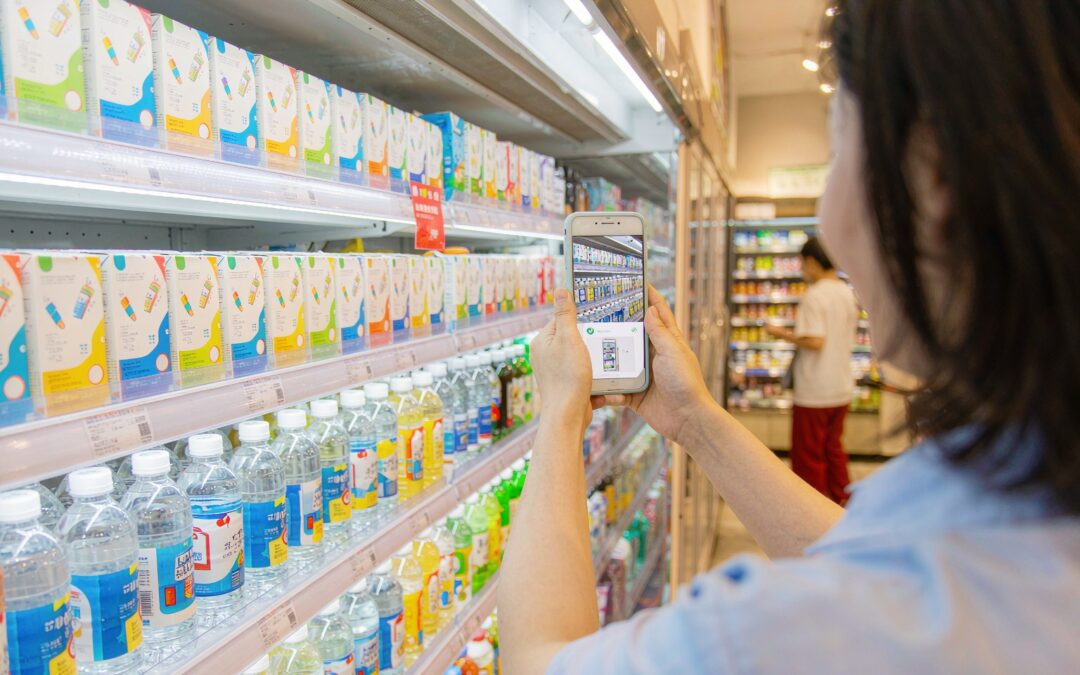
AI shelf monitoring is the practice of using computer vision to read a shelf photo and turn it into on-shelf availability data that a field rep can act on during the same store visit. It exists to close one specific gap: the distance between what a distributor’s system says is in stock and what a shopper can actually reach. Product sitting in the back room, shelf empty, nobody alerted — that is the failure this capability removes.
Why Out-of-Stocks Keep Costing Sales You Already Earned
Most consumer-goods brands do not lose revenue because demand vanished. They lose it because the product was in the building but not on the shelf. Industry research puts the share of SKUs shoppers want that are unavailable at the moment of a visit somewhere between 8% and 12%, and the damage is not limited to one missed basket. A shopper who cannot find their brand buys a competitor’s product, and a meaningful share of them never come back.
The uncomfortable part is where the problem lives. Roughly 60% of out-of-stock incidents trace back to in-store execution rather than a supply chain failure. The truck arrived. The delivery was scanned. The case went into the back room and stayed there. Meanwhile nobody on the brand side had a signal that anything was wrong, because the retailer’s system still showed the SKU as in stock. This is phantom inventory — the perpetual record says eight units, the shelf says zero, and the replenishment engine stays quiet because it trusts the record (NielsenIQ insights).
Promotions make it worse. Promoted items go out of stock at roughly double the normal rate, which means the weeks a brand spends the most money are often the weeks its availability is weakest. That combination is expensive in a way that rarely surfaces in a single report: trade spend is booked, the display is agreed, and the shopper still walks out empty-handed.
So the practical question for a commercial team is not “what is our in-stock rate?” It is “how often could a shopper actually buy this SKU from the shelf?” Those are different numbers, and AI shelf monitoring exists because the second one is the one that converts (Gartner sales research).
McKinsey’s consumer-goods work keeps arriving at the same conclusion from a different direction: the return comes from acting on execution data, not from collecting more of it (McKinsey CPG insights). That is the standard a shelf-monitoring deployment should be judged against.
The Gap Between Warehouse In-Stock and Shelf Availability
Availability leaks at every layer of the chain, and each layer is usually reported in isolation. A distributor can report 98% in-stock while the store sits at 96%, because a delivery was skipped. The store can sit at 96% while the shelf is genuinely buyable only 92% of the time, because product is in the back room instead of faced. Stack those leaks, and a SKU that looks healthy in a warehouse dashboard is available to the shopper far less often than anyone assumed. That final number is the one that decides whether demand converts — and it stays invisible unless something actually looks at the shelf, at shelf level, often.
How Does AI Shelf Monitoring Work in a Store Visit?
The workflow is deliberately short, because it has to fit inside a visit that is already time-boxed. In practice, AI shelf monitoring runs as four connected motions: capture, recognition, correction, and verification. What separates a working deployment from a conference demo is that none of them are deferred to the next visit or to a monthly report.
Step 1: Capture the shelf at the moment of decision
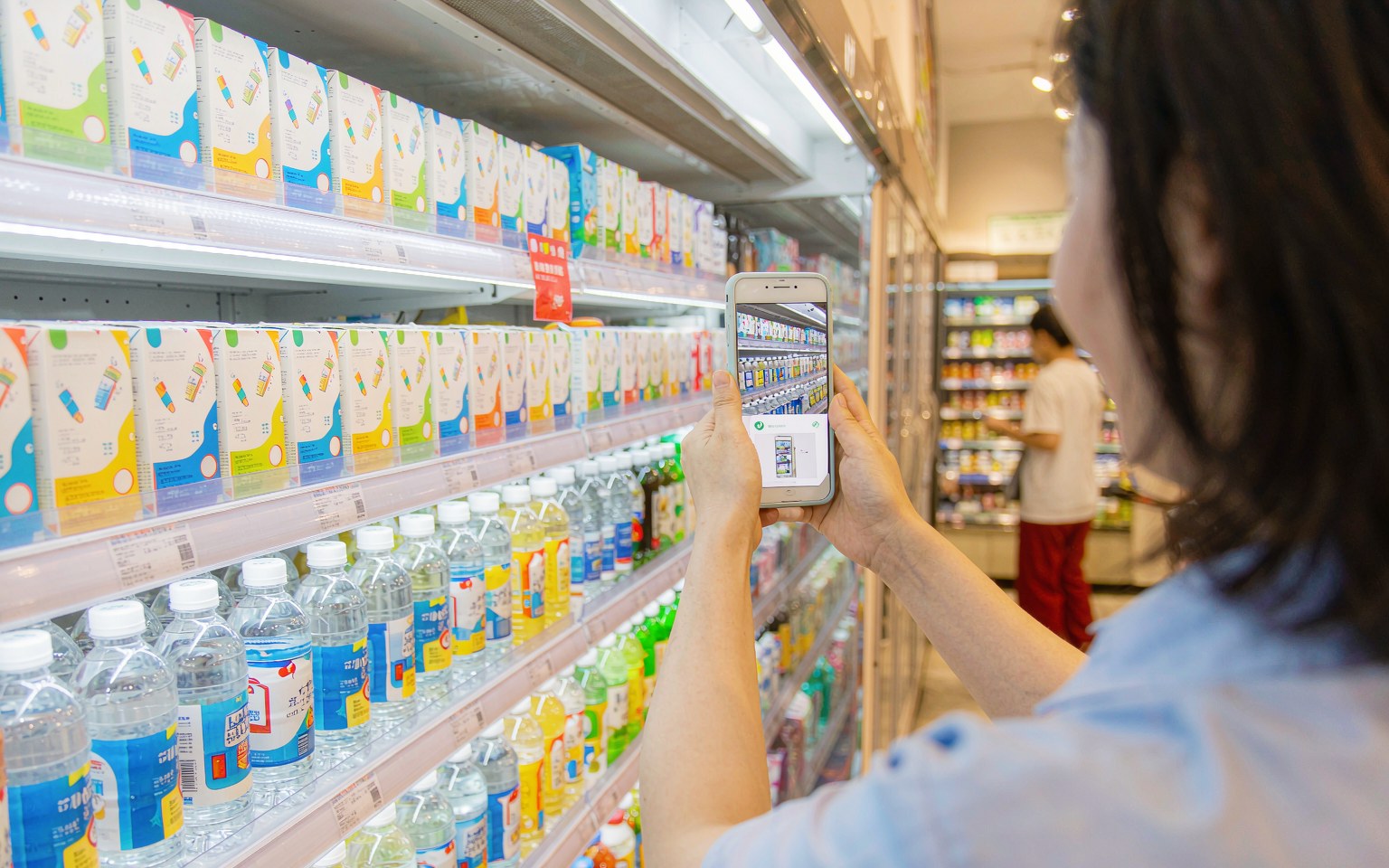
The rep photographs the shelf with the phone already in hand. No extra device, no fixed camera, no retailer sign-off required. Capture has to be near-frictionless, because a workflow that adds thirty seconds per shelf simply will not survive contact with a 60-outlet week. This step is also where data integrity is protected. Replay detection runs on every image, so a photo reused from a previous visit gets flagged before it ever becomes a number in a report.
Step 2: Recognition, scoring, and the honest flag
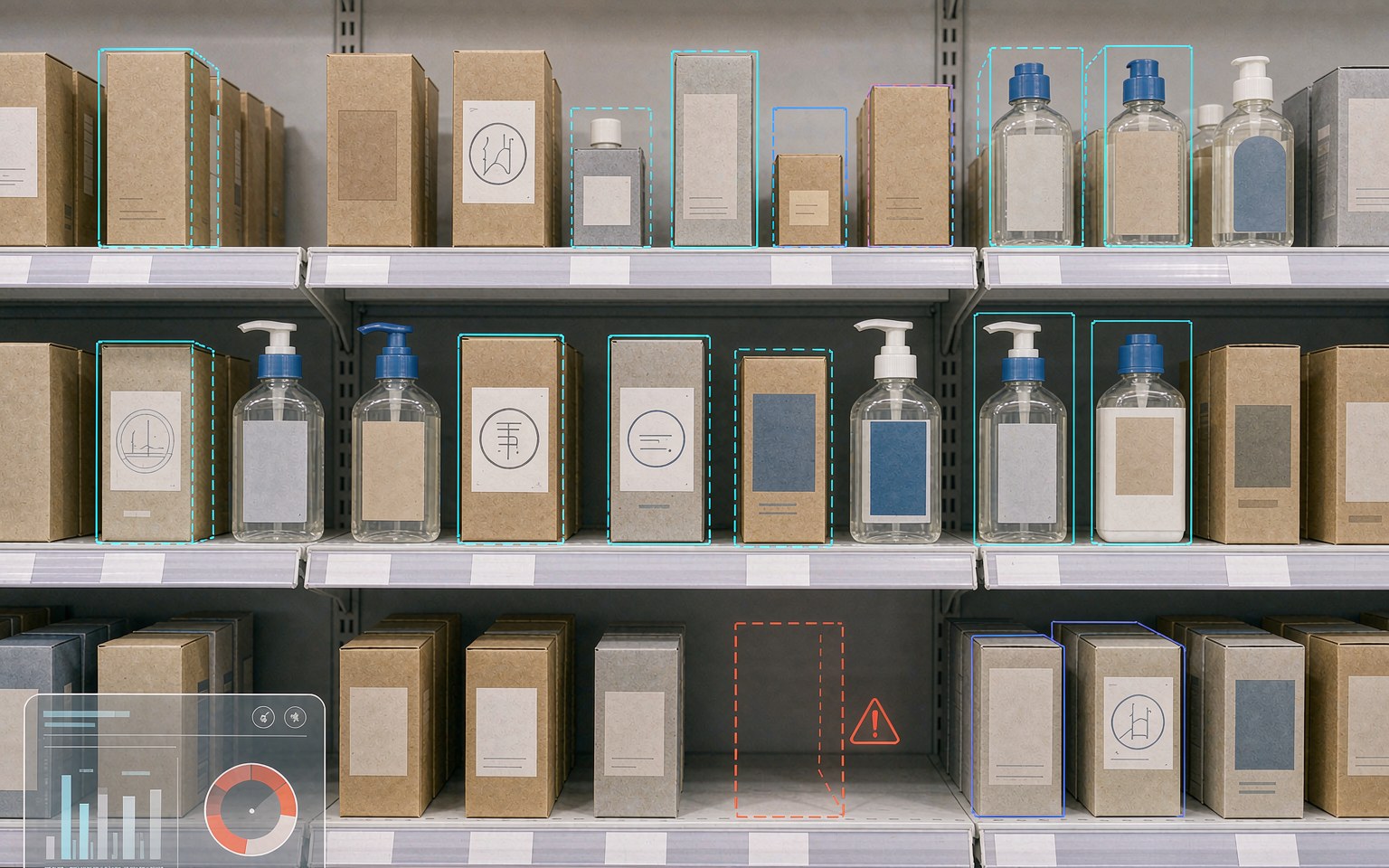
Once the image lands, recognition does the counting that used to consume the visit: which SKUs are present, how many facings each holds, where the gaps are, and whether the agreed display material is actually up. That is broader than a stock-out check. A capable engine reads the main shelf, point-of-sale materials such as shelf strips and light boxes, and special displays such as floor stacks and end caps, then expresses the result as quantitative shelf share and compliance rather than a subjective note.
The detail that matters most is what happens when the AI is wrong. Shelves are messy, lighting is poor, and packaging changes. A system that presents its output as final quietly erodes trust the first time it miscounts a high-visibility SKU. A system that lets the rep correct the result, and routes that correction into an automated re-check, keeps the field force on side. That is why the appeal path is a feature rather than an afterthought.
Step 3: Close the loop before the rep leaves the store
Detection alone changes nothing, because someone still has to fix the shelf. So the output of recognition has to land as an action inside the same visit — restock from the back room, correct the display, raise the order, or log the exception with photo evidence. This is the step most shelf-intelligence tools leave open, since their pipeline ends at a dashboard rather than at a task. When the loop closes in-store, availability improves the same day instead of the same month. As Gartner frames the shift, value has moved from generating insight to acting on it inside governed workflows (Gartner supply chain research).
Step 4: Verify the fix and learn across visits
A corrected shelf is not a solved shelf. The pattern across visits is what tells a sales director whether an outlet has a chronic replenishment problem, whether a promotion never made it to the floor, or whether a rep is systematically avoiding the back room. Because every visit produces a comparable measurement, AI shelf monitoring builds a trend line instead of a snapshot. In practice, that trend is what turns an availability number into a coaching conversation — and it is why the capability belongs inside the platform that runs the visit, not in a separate audit tool that ships a spreadsheet once a month.
What Should CPG Teams Demand From Shelf Monitoring AI?
Not every tool that calls itself AI shelf monitoring measures the same thing, and the differences decide whether you get continuous visibility or another monthly audit. Compare the three delivery models honestly before you shortlist.
| Capability | Manual store audit | Fixed shelf cameras or sensors | AI shelf monitoring on a field device |
|---|---|---|---|
| Coverage | Whatever the visit plan reaches | Only instrumented stores | Every visit, every outlet in the beat |
| Hardware cost | None | Cameras, sensors, installation, maintenance | None — runs on the rep’s existing phone |
| Retailer cooperation | Access required | Installation required | Not required |
| Frequency | Weekly to monthly | Continuous inside the store | Every visit, plus a continuous trend line |
| Capture integrity | Rep judgement, hard to verify | Sensor-based | Replay detection on every photo step |
| Handling AI mistakes | Not applicable | Vendor-defined | Rep can correct, and the correction triggers a re-check |
| Closing the loop | Sometimes, later | Alerts the store team | Action issued during the visit |
| Analytics access | Export and pivot | Vendor portal only | Ask the data a question in plain language |
Run that comparison against your own territories before shortlisting. In many emerging and mid-market geographies the camera column is effectively unavailable, because no retailer will install shelf sensors across thousands of traditional-trade outlets. That does not mean those outlets go unmeasured. It means the sensor is the phone in the rep’s pocket, and the platform has to be good enough to work from a single photograph taken in a crowded aisle.
Three requirements follow. First, the platform must be offline-first, because the shelf does not wait for a signal and a dead zone should not cost you a measurement. Second, correction has to be built in, because uncorrectable AI output stops being trusted within weeks. Third, shelf data has to be queryable in natural language, because an availability problem that needs a BI analyst to explain it is an availability problem that stays unfixed.
How eBest Puts AI Shelf Monitoring to Work
eBest builds AI shelf monitoring into the same platform that runs the visit, which is what makes the correction step possible rather than aspirational. The eBest SFA platform captures the shelf inside the standard visit flow, and AI Image Recognition handles main-shelf, POSM, and special-display checks — facings, shelf share, and compliance counted from the photo. If a count is wrong, the rep raises an appeal and the AI re-checks, so the field force retains ownership of its own data.
Two more capabilities matter for the loop. Replay detection runs on every photo step, including check-in and check-out, so availability figures rest on images that were genuinely taken in the store today. Then trade promotion management connects what the shelf shows to the promotion that was supposed to be running, which means a missing display is caught while the promotion still has time to work. On the analytics side, AI Chat Report lets a regional manager ask a plain-language question about shelf availability and get an answer without exporting a dataset, while AI KPI Suggestion converts a persistent availability gap into a named improvement action instead of a red cell nobody owns.
That combination runs in production with CPG customers including Coca-Cola, whose UAE field organization went live on eBest SFA across six sub-teams from day one, alongside Nestlé, Unilever, P&G, Carlsberg, Mars, and Danone. For brands selling through distributors, distributor management system data keeps secondary sales aligned with shelf reality, so replenishment is not driven by a phantom number. You can see how these deployments come together in the eBest customer results library.
Frequently Asked Questions
What exactly is AI shelf monitoring?
AI shelf monitoring is the use of computer vision to analyze an image of a retail shelf and produce structured availability data — which SKUs are present, how many facings they hold, and where the gaps are. Because the analysis runs on a field rep’s phone, it works in outlets where installing cameras or smart shelves is not realistic. Practically, it replaces the manual counting step of a store audit, so the same information arrives faster, more consistently, and with photo evidence attached to it.
How is AI shelf monitoring different from on-shelf availability?
On-shelf availability is the metric; AI shelf monitoring is the method used to measure and improve it. On-shelf availability expresses the percentage of time a product is physically on the shelf and buyable, with 95% or higher the usual target for key SKUs, and the gap against that target is where lost sales hide. AI shelf monitoring is the mechanism that generates that figure at store and SKU level during normal visits, instead of inferring it from point-of-sale data or waiting for a periodic audit.
Do we need shelf cameras or sensors to run this?
No, and that distinction is often the deciding factor. Camera-and-sensor deployments deliver continuous in-store measurement, yet they require retailer agreement, capital expenditure, and installation in every store you want covered. A phone-based approach treats the visit itself as the measurement event, so coverage follows the field force rather than the hardware budget. Most brands end up hybrid: sensors where a retailer co-invests, and AI shelf monitoring everywhere else.
How accurate is the recognition, and what happens when it is wrong?
Accuracy is high enough for commercial use on mainstream packaging, but no vision model is perfect — reflective film, damaged packs, and new artwork all create edge cases. The design answer matters more than a benchmark number. The rep should be able to correct a count, and that correction should trigger an automated re-check rather than being silently overwritten. A platform with no correction path tends to see adoption collapse the first time it miscounts a SKU the store manager is watching.
Does AI shelf monitoring replace field reps?
It replaces the part of the visit reps dislike and do badly under time pressure: manual counting and report writing. The judgement work stays human, because negotiating a display, persuading a store owner to free up a facing, and deciding which gap is worth escalating are not counting problems. The practical effect is that the same rep covers the same outlets with better information and more time in front of the person who controls the shelf — which is why availability improves fastest where the technology is treated as a co-pilot rather than a replacement.
Availability is won or lost in the thirty seconds a rep spends in front of a shelf, and most brands have never held a reliable record of what happens in those thirty seconds. AI shelf monitoring changes that by making the shelf readable, correctable, and actionable inside the visit rather than after it. If out-of-stocks are quietly taxing your trade spend, the cheapest experiment is a single region run on shelf AI before you commit across markets. Talk to the eBest route-to-market team about a pilot in your toughest territory.
Ready to Digitize Your Route to Market?
Learn how eBest’s integrated SFA, DMS, and TPM platform helps leading CPG brands turn distribution data into competitive advantage.