
Artificial Intelligence FMCG: Tech Stack & Use Cases
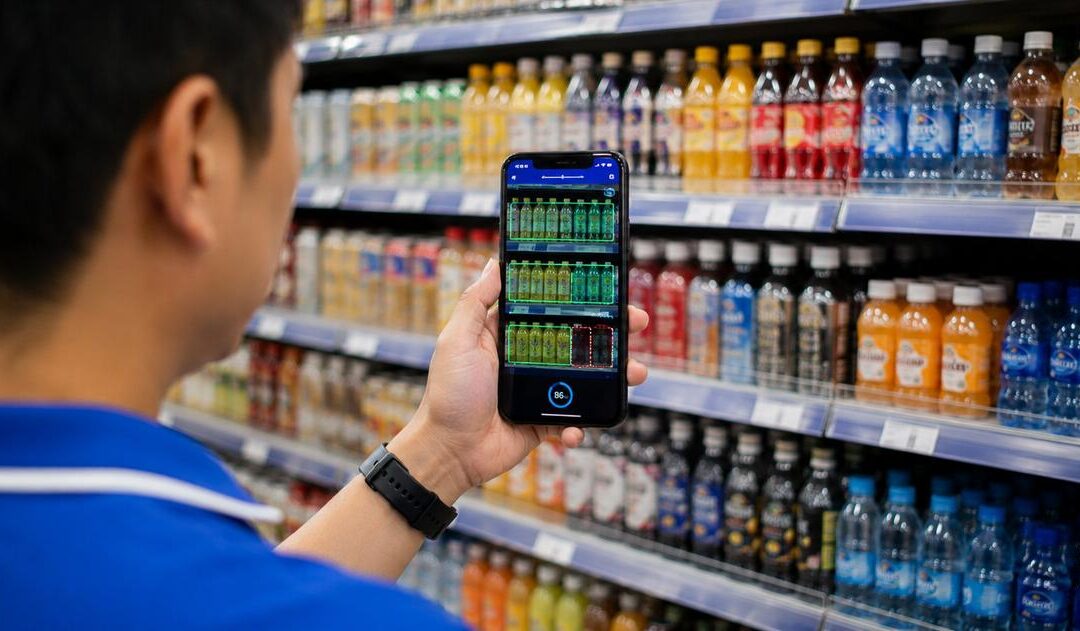
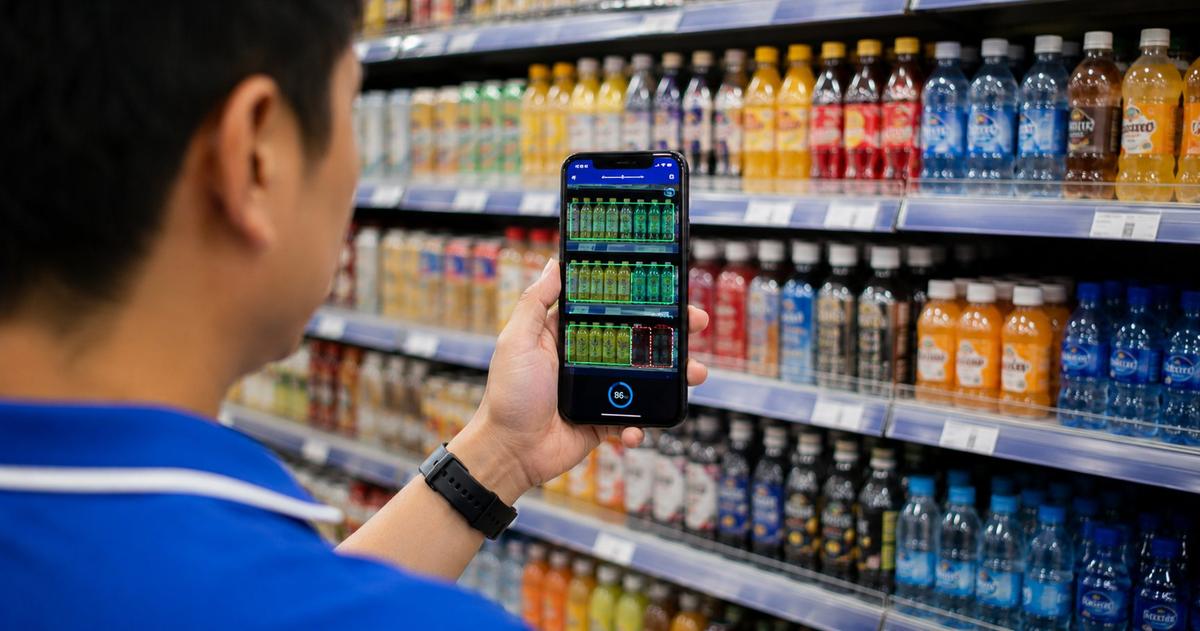
A field rep photographs a shelf, and six seconds later the app reports facings, flags two missing SKUs, and pulls a store-specific pitch onto the order screen. That single moment is the whole story of artificial intelligence fmcg: not a chatbot on a corporate site, but a stack of production models running inside the daily route-to-market — seeing the shelf, sizing the promotion, planning the drive, and keeping the warehouse honest.
Most writing on artificial intelligence fmcg stops at the industry view. Our AI in FMCG guide covers the category and why field teams need it; this piece goes one layer down — into the actual technologies, the use cases they power, and how to evaluate vendors without getting lost in the word “AI-powered.”
The Artificial Intelligence FMCG Tech Stack Running in CPG Today
Artificial intelligence fmcg is not one model. It is a set of distinct technologies, each solving a specific field problem, stitched together by shared execution data.
Computer vision for shelf image recognition. A photo becomes a compliance report: SKU facings, shelf-share, POSM and special-display checks, with a human appeal path when the model is unsure. This is the most deployed vision system in consumer goods because it replaces a manual, error-prone audit with something instant and consistent. NielsenIQ’s retail execution research points to execution consistency — not promotion size — as the thing that protects share in volatile categories, which is why shelf recognition pays for itself fastest.
Machine learning for demand and promotion forecasting. Forecast models read order history, seasonality, weather, and promotion calendars to size both baseline demand and promo lift. The useful versions are not black boxes; they expose the drivers behind a number so a category manager can defend a budget. Done well, this is the layer that tells you which trade promotion will actually pay back.
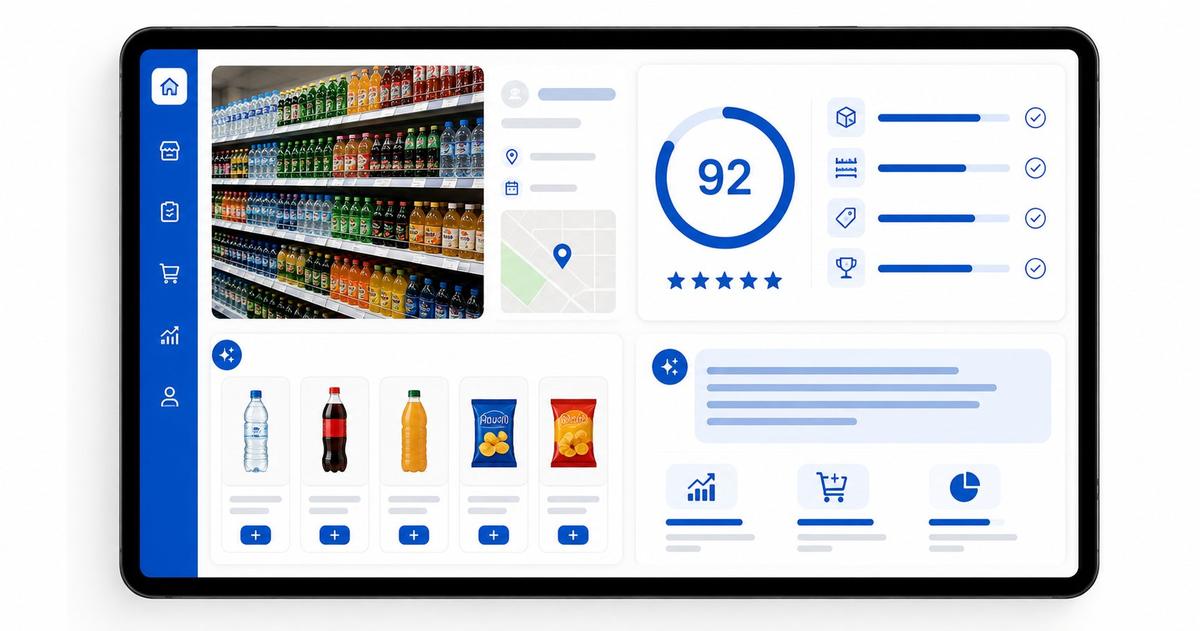
LLM copilots for sell-in and analytics. Large language models sit on top of execution data to do two jobs. One is the in-visit pitch: read the outlet profile and local best-sellers, then generate a store-specific sell-in story. The other is management analytics — text-to-SQL that turns “why did outlet coverage drop in region 3” into an instant report. The model is only as good as the data underneath it, which is the part most vendors skip.
Reinforcement learning for route optimization. Routing used to be geographic — nearest neighbor, shortest drive. RL reorders the day by revenue potential and service priority, learning from what actually happened: which stores converted, which were closed, which needed a second call. Drive time drops, store coverage rises.
Warehouse audit vision. The same computer vision that reads a shelf reads distributor stock — products and quantities on a rack, turned into a compliance report that catches gaps before they ever reach the store.
The market direction for artificial intelligence fmcg is clear. McKinsey’s consumer-packaged-goods research keeps returning to execution data as the untapped layer in CPG digital transformation, and Google Cloud’s retail and consumer goods solutions treat computer vision and forecasting as standard building blocks rather than experiments.
Artificial Intelligence FMCG Use Cases Mapped to Route-to-Market
The artificial intelligence fmcg stack above maps cleanly onto the four pillars of route-to-market operations.
- SFA (field sales automation): shelf image recognition at every visit, sell-in suggestions on the order screen, and RL-based visit sequencing. Our SFA software is where these capabilities live in production.
- DMS (distributor management): warehouse audit vision and stock-gap alerts that feed back into the field forecast. The distributor management system closes the loop between what the store needs and what the distributor holds.
- TPM (trade promotion management): ML promotion forecasting that sizes lift and flags plans that won’t pay back before money is committed.
- DSD (direct store delivery): route optimization and delivery compliance, where the AI plans the run and verifies the drop.
eBest Mobile runs all four — SFA, DMS, TPM, and DSD — on one mobile-first platform, which is what lets each model see the same store, shelf, and distributor stock. Two concrete examples worth naming: perfect store image recognition, which scores the shelf from a phone photo even offline, and AI sell-in suggestion (the AI Selling Story), which builds the store-specific pitch during the visit. There is also AI Chat Report for natural-language analytics, AI route optimization that sequences the day by revenue rather than by map order, AI warehouse audit for distributor compliance, and an agentic visit planning layer that proposes the day’s call list. For the routing angle specifically, see our piece on AI route optimization for CPG field sales.
How to Evaluate Artificial Intelligence FMCG Vendors
The phrase “AI-powered” on a slide tells you nothing. Four tests separate real artificial intelligence fmcg capabilities from a label.
First, data connectivity. Can the model see field, distribution, and promotion data together? A sell-in model that only reads historical orders cannot know the shelf is short two facings, so its recommendation misses the point. Ask to see the integration, not a demo of one isolated feature.
Second, integrity layer. If reps can game the photos, the AI learns from garbage. Ask whether the vendor has replay or fake-photo detection at the capture step. eBest’s replay / fake-photo detection flags screen-captured or reused images at every photo step — a trust layer most “AI-powered” vendors never mention.
Third, named, testable capabilities. Demand “show me shelf recognition,” not “show me our AI.” Each capability should be watchable on a real rep’s device in a demo. If the vendor can only describe the capability in adjectives, it is not in production.
Fourth, closed loop, not a separate tool. The AI has to live inside the workflow — visit app, order screen, route planner. A tool reps must open separately gets abandoned in week two.
Where Artificial Intelligence FMCG Compounds (ROI Framing)
Artificial intelligence fmcg compounds where the data loops. A shelf photo improves the sell-in suggestion; the sell-in improves the order; the order sharpens the demand forecast; the forecast tunes the promotion; the promotion result retrains the model. Each turn makes the next one better, and the loop only runs when one platform holds the data.
The ROI is not one headline metric. It is the sum of small, repeated wins: fewer missing facings, sharper pitches, shorter drives, earlier warehouse gaps, promotion budgets that stop leaking. BCG’s consumer products work frames this as execution advantage — the brands that see the shelf first act first, and the lag between shelf and headquarters is the cost AI removes.
The Three Risks That Kill Artificial Intelligence FMCG Programs
Most artificial intelligence fmcg programs fail for reasons that are rarely technical.
Disconnected data. A model trained on one silo produces advice the other silos contradict. This is the most common failure, and the most expensive, because it looks like intelligence until someone acts on it.
No integrity layer. Without photo or data verification, the AI optimizes against numbers nobody trusts. Garbage in, confident suggestions out.
Dashboards nobody reads. The oldest trap: a beautiful analytics view that lands in an inbox and changes nothing. Artificial intelligence fmcg earns its cost only when it pushes an action into the workflow — a suggestion on the order screen, a route reorder, a flagged gap — not when it produces another report to ignore.
Artificial Intelligence FMCG FAQ
What technologies make up artificial intelligence fmcg?
Artificial intelligence in FMCG is built from computer vision for shelf and warehouse image recognition, machine learning for demand and promotion forecasting, LLM copilots for sell-in and analytics, and reinforcement learning for route optimization. Each is a distinct model solving a specific field problem, and they only compound when they share one execution data layer.
How is computer vision used in FMCG?
Computer vision reads shelf photos into compliance reports — SKU facings, shelf-share, POSM and display checks — and does the same for distributor stock in warehouse audits. It replaces manual, lagging audits with something instant and consistent, and it runs on a rep’s phone, often offline.
What is LLM copilot use in FMCG sales?
An LLM copilot does two jobs on top of execution data: it generates a store-specific sell-in story during the visit, and it answers management questions in plain language through text-to-SQL. The model is only useful when it sits on connected field, distribution, and promotion data rather than on a disconnected knowledge base.
How do you evaluate an AI vendor for FMCG?
Test four things: data connectivity across field, distribution, and promotion; an integrity layer such as replay or fake-photo detection; named capabilities you can watch on a real device in a demo; and a closed loop where the AI lives inside the workflow rather than in a separate tool. Ignore the “AI-powered” label on its own.
Where does AI in FMCG deliver the most ROI?
ROI compounds in the loop where a shelf photo improves the sell-in, the sell-in improves the order, the order sharpens the forecast, and the forecast tunes the promotion. It is the sum of repeated small wins — fewer missing facings, sharper pitches, shorter drives — not one headline metric.
What are the main risks of AI in FMCG?
The three that kill programs are disconnected data that produces contradictory advice, no integrity layer so the AI learns from unverified inputs, and dashboards nobody reads because the AI reports instead of acting. All three are architecture problems, not model problems.
How to Adopt Artificial Intelligence FMCG
A four-step path keeps the rollout tied to revenue instead of to a model showcase:
- Audit your execution data connections. Map where field visits, distributor stock, and promotion plans actually live, and find the gaps. Artificial intelligence fmcg starts as a data question, not a model question.
- Require named, testable capabilities. In every vendor conversation, ask for a live demo of a specific capability on a real device — shelf recognition, sell-in suggestion, route reorder. Adjectives are not evidence.
- Insist on an integrity layer. Turn on replay / fake-photo detection at the capture step so the data the models learn from stays honest from day one.
- Embed AI in the workflow and measure a named KPI. Put the suggestion on the order screen and the route reorder in the planner, then track perfect store score or pitch acceptance in the pilot before expanding to warehouse audit and promotion analytics.
Artificial intelligence fmcg stops being a slogan the day it lives inside the rep’s app: the shelf is scored from a photo, the pitch is built for that store, the route is planned for revenue, and the warehouse gap shows up before it costs a sale. The brands already running this stack aren’t buying technology — they’re buying back the lag between what happens at the shelf and what headquarters knows.
Want to watch these capabilities on a real rep’s device? Request a demo or explore how eBest’s SFA software and distributor management system put the AI stack to work in production.
Ready to Digitize Your Route to Market?
Learn how eBest’s integrated SFA, DMS, and TPM platform helps leading CPG brands turn distribution data into competitive advantage.