
Why the Beverage Industry
is the Ultimate Test
for FMCG Excellence
If your sales, distribution, and retail execution systems can thrive here, they are ready for any challenge. This is the benchmark we build upon with clients like Swire Coca-Cola.

In the diverse landscape of Fast-Moving Consumer Goods (FMCG), every category presents its own set of challenges. Yet, after years of deep collaboration across sectors, a clear consensus emerges among industry veterans: the beverage category, particularly ready-to-drink, represents the pinnacle of operational complexity. While other categories might operate on a “highway,” beverage players are essentially performing F1 racing on a mountain ridge.
This isn’t mere opinion; it’s a conclusion drawn from scale and intensity. Every common FMCG pain point—channel fragmentation, logistical hurdles, and retail execution—is magnified to its extreme within the beverage supply chain. Success here requires a management system of unparalleled precision, resilience, and intelligence.
If your system works here, it works anywhere.
Understanding this “ultimate test” is crucial, not just for beverage players, it provides a masterclass for any FMCG player seeking Sales Force Automation (SFA) excellence. Let’s break down the core complexities that define this sector.
Sales & Route-to-Market (RTM): Managing a Million Points of Presence
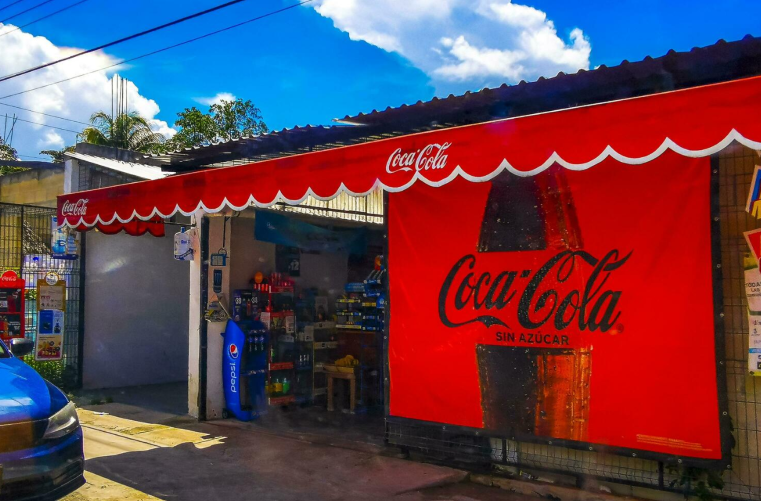
While most FMCG brands focus on modern trade and key retailers, beverage industry’s distribution reach is unparalleled in depth and breadth. From hypermarkets and convenience store chains to street food stalls, mom-and-pop shops, school cafeterias, and even isolated vending machines or freezers on a roadside—this forms a terminal network of millions, if not tens of millions, of touchpoints. This creates unique pressures:
Hyper-Fragmented, High-Frequency Orders: Unlike personal care, a single small outlet may require multiple restocks daily (e.g., morning dairy vs. evening beverages).
A single route might involve dozens of stops, each requiring a small, customized mix of SKUs. Managing millions of these micro-transactions demands a sales force automation (SFA) system capable of smart route planning, dynamic order capture, and real-time visibility at a granular level unimaginable in less intensive categories.
Supply Chain: The “Heavy & Bulky” Efficiency Trap
Beverages are fundamentally heavy, bulky, and low-value-per-unit products, making logistics cost a critical component of profitability. This reality forces an obsession with efficiency that few other categories must match. This dynamic pushes supply chain efficiency to its limits, creating the “mission-critical” challenges:
- The Multi-Temperature Maze: A single delivery van must often be a meticulously orchestrated mix of ambient, chilled, and frozen goods. Optimizing load, route, and temperature integrity is a daily logistics nightmare.
- The make-or-break tightrope of inventory management: Holding excess inventory ties up capital and drives up warehousing costs; conversely, stockouts during heatwaves, holidays, or promotional campaigns lead to empty shelves—and permanent market share erosion. Beverage brands don’t just compete for sales—they compete to stay in stock. This balance requires the supply chain to be agile enough to support just-in-time replenishment, where forecast accuracy and execution speed directly translate to market share.
- Asset Intensity: The management of coolers, vending machines, and point-of-sale materials adds a massive layer of asset tracking, maintenance, and ROI calculation absent in many other FMCG sectors.
Retail Execution: The Battle for Every Square Inch
In the beverage world, the shelf is a war zone measured in centimeters. Execution must be flawless.
- Cold War in the Cooler: In a convenience store’s freezer, one extra shelf facing for your brand means one less for a competitor. Prime real estate—eye-level shelves, middle freezer racks—along with temperature consistency and display cleanliness, are non-negotiable. Beyond that, brands compete for end caps, pallet displays, and checkout-counter placement. Securing and maintaining perfect positioning, visibility, and temperature for your SKUs requires relentless, audit-grade execution from the field team.
- Managing “Living” Inventory: Most beverages have short shelf lives (e.g., fresh juice, dairy-based drinks) and are sensitive to light, heat, and vibration. This means managing the full lifecycle of every bottle: batch tracking, first-in-first-out (FIFO) enforcement, and expiry date alerts. Monitoring the “age” of every bottle across millions of points of sale is a data-tracking nightmare.
- Promotional Compliance: Beverage brands rely on constant consumer promotions. Complex, fast-moving trade promotions must be executed perfectly at scale, with clear visibility into spend and ROI. Ensuring that “buy-one-get-one” or “under-the-cap” rewards are actually executed correctly across millions of terminals (with varying retailer capabilities), that trade spend is accurately disbursed, and that results are measured in real time is a massive management “black hole” without robust digital oversight.

Why the Toughest Battlefield Yields the Most Robust Systems
It is precisely because of these overwhelming challenges that the business and management systems developed by leading beverage giants like Coca-Cola are considered the gold standard in FMCG. Their operational playbooks represent the most mature, sophisticated, and stress-tested frameworks in the industry—forged under the most demanding conditions to ensure survival and growth.
This reality is central to the eBest philosophy. Our partnership with Swire Coca-Cola and other beverage leaders has been our most rigorous training ground. Co-developing SFA and distribution solutions to meet their extreme requirements has allowed us to build a platform that is inherently robust, intelligent, and scalable.
The eBest Advantage: If You Can Make It There…
For FMCG companies outside the beverage sector, this presents a powerful opportunity. You are not faced with the need to invent new solutions from scratch. Instead, you can adopt a system already proven at the highest level of difficulty.
Implementing eBest’s SFA solution means deploying a “battle-hardened” operational framework designed for the most complex scenarios. When applied to other FMCG contexts, it delivers what we call the “Pinnacle Proven Advantage” – a level of stability, insight, and control that feels like a decisive step ahead.
Why settle for systems designed for simpler challenges when you can deploy one built for the toughest?
Explore how the operational excellence refined in the beverage industry can transform your business. Download our detailed case study on mastering FMCG complexity or speak directly with our experts to assess your needs.
Ready to Deploy a Pinnacle-Proven System?
- Explore the Case Study: [“Swire Coca-Cola case – beverage industry best practice “] – Get an in-depth look at the strategies and results.
- Schedule a Consultation: [Speak with an FMCG Solutions Expert] – Discuss your specific channel and distribution challenges in a 15-minute, no-obligation session.